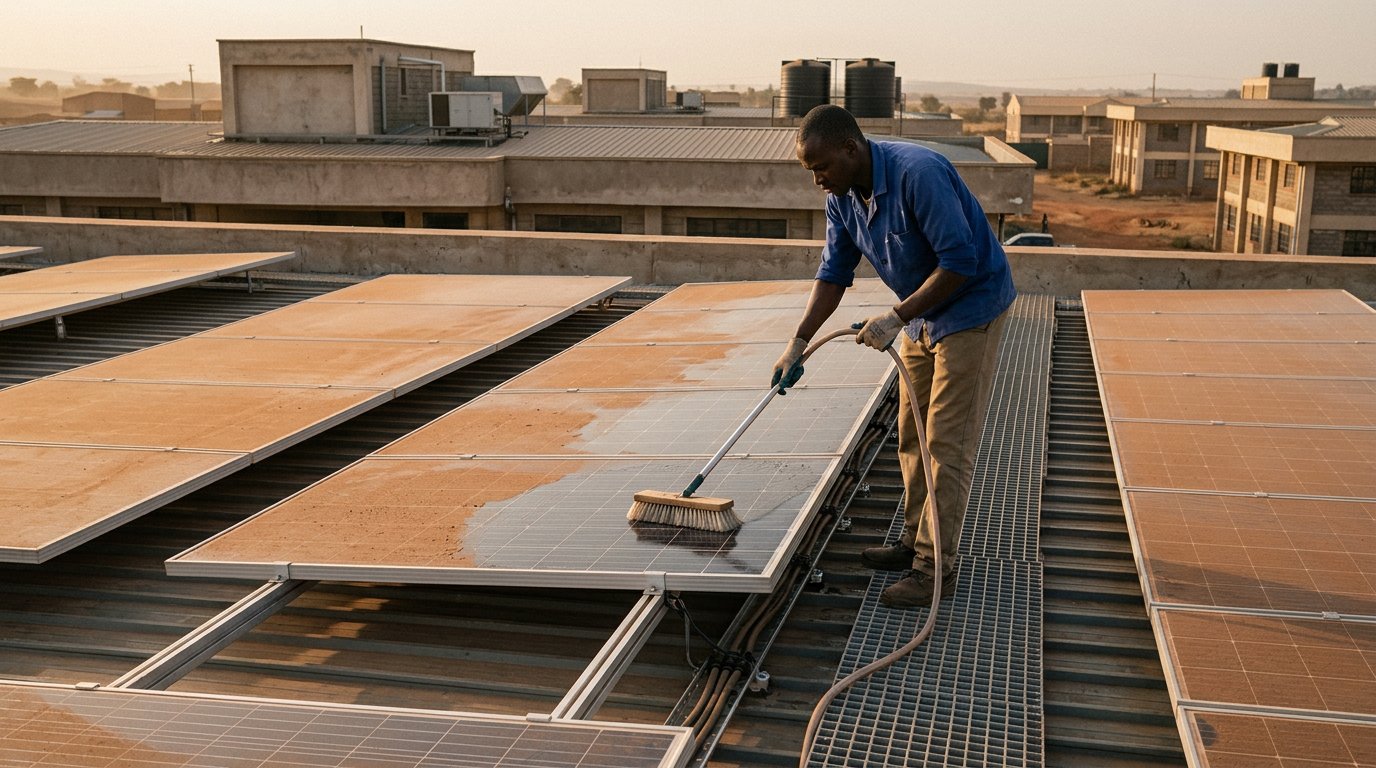
Reliable solar operations and maintenance combine planned inspections, system monitoring, and component care suited to site conditions. A professional assesses panels, inverters, mounting structures, and electrical connections, then plans cleaning around local dust, rainfall, and debris instead of applying one schedule to every Kenyan site.
Routine maintenance matters because soiling and equipment faults can reduce energy production or interrupt supply. Waiting for a visible failure may leave a problem undetected while it affects performance. Preventative maintenance helps identify developing issues early; reactive maintenance addresses faults after they occur.
This article explains how professionals maintain solar system components, what influences panel-cleaning schedules in Kenya, and how preventative and reactive maintenance differ. It also covers the operational benefits of solar PV upkeep, including improved availability, earlier fault detection, safer operation, and better-informed planning.
Key Takeaways
- Set panel-cleaning schedules around site conditions, including dust, rainfall, and debris, rather than relying on one interval for every installation.
- Professional inspections and generation monitoring help identify component faults and performance changes before they lead to extended downtime.
- Understand how scheduled preventative work differs from repairs made after a fault, and how each approach affects operational continuity.
- Solar PV upkeep supports safer operation, more dependable energy production, and informed decisions about repairs and system upgrades.
How often should solar panels be cleaned in Kenya?
In Kenya, panel-cleaning frequency should reflect site conditions, not a single schedule for every installation. Dust, rainfall, bird activity, and changes in energy output all help determine when cleaning is useful.
Dust and Panel Soiling
Panel soiling is the buildup of dust, dirt, bird droppings, and other deposits on photovoltaic modules. These materials reduce the sunlight reaching the cells and can lower energy output. A site near unpaved roads, for example, may collect dust faster than one with regular rainfall. Professionals consider visible soiling alongside generation trends to decide whether cleaning is needed.
Water-Efficient Panel Cleaning
Water-efficient cleaning removes deposits while limiting water use and avoiding unnecessary stress on modules. Professionals choose a method based on the type of soiling, available water, and array access. Robotic or waterless systems may suit some projects, while washing may be needed for deposits those methods cannot remove. The chosen method should avoid abrasive contact that could damage panel surfaces.
Site-Based Panel Washing
Site-based cleaning plans account for dust exposure, rainfall, nearby vegetation, bird activity, and observed generation changes. A site with recurring dust may need attention sooner than one where rainfall regularly clears loose deposits. Cleaning frequency depends on site conditions and monitoring. Cost depends on array size, access, soiling, water needs, and travel, so request a project-specific quote.
Cleaning and Panel Inspections
Professionals can coordinate cleaning with visual checks of module surfaces, mounting hardware, wiring, and signs of pest activity. They can document defects and recommend follow-up testing where needed. In-house teams may know the site well, while outsourced specialists can bring dedicated technical resources; cost and reliability depend on staffing, scope, and planned coverage. A maintenance contract should define assets, cleaning and inspection duties, warranty coordination, exclusions, reporting, and response times. Work planning in Kenya should address electrical hazards, safe access, and site-specific risk controls.
How can I maintain the components of my solar energy system?
Professional upkeep combines visual checks, generation monitoring, and targeted testing. Together, these measures can help identify faults before they disrupt a solar system’s output.
Professional Visual Inspections
A visual inspection checks accessible modules, mounting structures, cabling, and inverter indicators for visible changes or fault warnings. These checks matter because loose connections, damaged components, and structural movement can affect safe operation and energy production. A technician records issues and relates them to system performance. Inspection findings also help determine whether further electrical testing or corrective maintenance is appropriate.
Generation Monitoring
Generation monitoring tracks a system’s energy output over time and flags departures from its normal operating pattern. Inverter dashboards and remote monitoring platforms can show production and fault alerts, while larger power plants may use plant-level monitoring technologies. Available options include inverter platforms and SCADA systems where installed; the suitable setup depends on system design and monitoring requirements.
Performance Data Analysis
Performance analysis compares output trends with operating conditions to distinguish equipment faults from changing sunlight or system availability. Common faults include inverter malfunction, hot spots, and non-operating strings; technicians investigate alerts through inspections, electrical testing, or thermal imaging. Battery maintenance, degradation, and replacement in Kenya are managed by reviewing available battery-system data and operating performance. This assessment helps identify changes that may warrant further testing or replacement planning.
Grid and SCADA Monitoring
Grid monitoring records how a grid-connected solar power plant operates alongside the utility supply, including interruptions and changes in delivery. SCADA can track panel status, plant output, and electrical deliveries to the grid, helping operators locate underperforming sections. Continuous monitoring supports timely investigation, but alarms require technical diagnosis before corrective work. For coordinated monitoring and assessment, professional solar system monitoring can help link performance data with maintenance decisions.
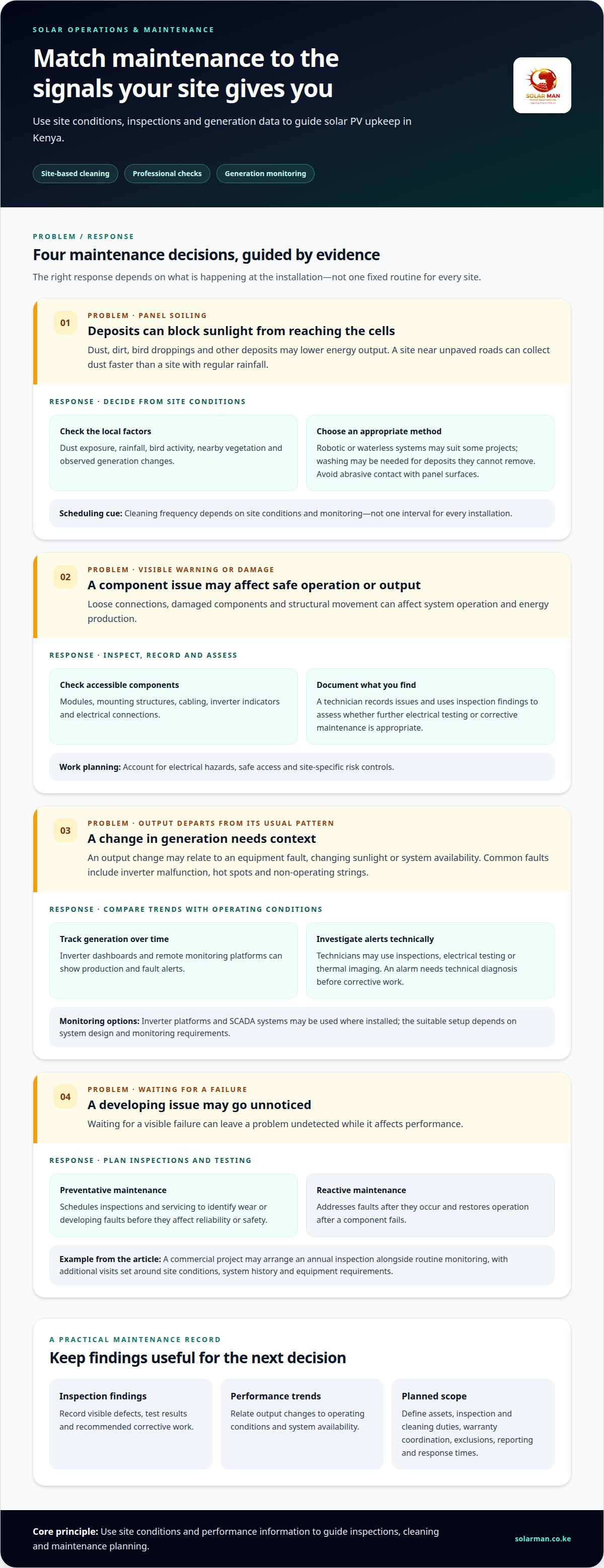
Preventative and reactive maintenance
Preventative maintenance schedules inspections and servicing before faults interrupt production. Reactive maintenance restores operation after a component fails. The approaches differ in planning, downtime, and repair demands.
Planned Preventive Maintenance
Planned preventive maintenance uses scheduled inspections and testing to assess solar photovoltaic modules, inverters, mounting systems, and electrical connections. Its purpose is to identify wear or developing faults before they affect reliability or safety. A commercial project may arrange an annual inspection alongside routine monitoring, then set additional visits around site conditions, system history, and equipment requirements. Technicians document findings and recommended corrective work.
The inspection scope should reflect the installation, not rely on a generic checklist. Technicians can assess visible module damage, mounting integrity, inverter condition, and electrical connections, then record test results. This creates a maintenance history for trend analysis and component-service planning. A documented schedule also clarifies which tasks are planned and which follow new fault alerts.
Predictive Maintenance
Predictive maintenance uses operating data and condition assessments to identify components showing signs of deterioration. It helps prioritize an inspection or repair before a developing issue causes an outage. For example, repeated inverter alerts or declining output from a section can prompt targeted testing instead of waiting for complete failure. Advanced predictive methods may reduce solar maintenance costs by around 25-30%.
Predictive analysis complements scheduled work rather than replacing it. Monitoring can show where technicians should focus, while inspection and testing help establish the fault and appropriate response. This approach is most useful when system data is consistent enough to reveal meaningful changes over time.
Reactive Maintenance
Reactive maintenance begins after a fault, such as an inverter malfunction or damaged wiring, affects operation. It is necessary when unexpected failures occur, but unplanned disruption can interrupt energy production and require urgent diagnosis. Repair work may also need more extensive testing if the original cause is unclear.
A balanced maintenance programme combines planned inspections, predictive analysis, and responsive repairs. Preventative practices reduce avoidable failures, while reactive work addresses faults that still arise. For solar projects, planned work supports reliability; fault response restores affected components and safe operation.
Benefits of solar PV operations and maintenance
Solar PV systems are expected to operate reliably for more than 25 years, making maintenance a long-term asset-management requirement. Regular servicing helps maintain energy production as ultraviolet exposure, temperature changes, and material wear gradually affect panels and other equipment. For Kenyan businesses, sustained output supports dependable renewable energy supply for daily operations.
Performance and availability are closely linked. Monitoring, cleaning, inspections, and timely repairs can identify soiling, damaged modules, electrical faults, and inverter problems before they cause extended downtime. At a solar power plant, an underperforming string can reduce part of the array’s output. Investigating it early helps operators target corrective work instead of leaving lost generation unresolved.
Maintenance also supports equipment life and operational safety. During planned inspections, technicians can identify loose wiring, damaged components, and structural concerns, then arrange appropriate corrective work. Addressing hazards promptly helps reduce the likelihood of equipment failure and unsafe working conditions. Replacing worn components and planning upgrades can also keep the installation aligned with its operating requirements.
For commercial plants, reliable solar power can support more consistent electricity generation and revenue. Preventative work can reduce the likelihood of expensive unplanned repairs, while maintenance records help operators track recurring issues and plan resources. Where a site relies on solar generation for critical loads, reducing downtime can protect operational continuity and limit disruption to connected processes.
The practical benefit is better control over system condition: operators can use inspection findings and production records to prioritize repairs, manage equipment risks, and plan upgrades. For a site with declining output or recurring faults, professional solar maintenance and system upgrades can help assess performance and define the appropriate next work.
Solar Man Power Solutions: Solar Operations, Maintenance & System Upgrades
Solar Man Power Solutions provides solar operations, maintenance, and system upgrades for installations that need performance assessment, scheduled servicing, fault diagnosis, or equipment improvements. Use the service when monitoring shows reduced output, recurring faults need investigation, or an existing system requires planned upkeep.
For projects requiring broader technical support, the company also provides Solar PV System Design & Installation, solar backup power systems and Energy Storage Systems (ESS), and off-grid vs hybrid solar solutions. The right work depends on system configuration, site conditions, and operating requirements. Share the system details and the issue or upgrade you are considering so the work can be scoped accordingly.
Contact Solar Man Power Solutions to discuss maintenance or upgrade requirements.
Plan the next stage of your solar system
Use the next maintenance review to connect current system performance with future operating requirements. Changes in site demand, equipment condition, or power-supply priorities can influence whether the next step is continued servicing, an upgrade, or a broader system assessment. A clear maintenance history gives professionals a practical basis for that decision.
Solar Man Power Solutions Ltd supports this planning through solar operations and maintenance, system upgrades, Solar PV System Design & Installation, Energy Storage Systems (ESS), and hybrid, grid-tied, and off-grid solar solutions. These services can help align maintenance decisions with a project’s configuration and energy needs.
Discuss your system’s condition, operating priorities, and planned changes with Contact Solar Man Power Solutions Ltd. A considered next step can help keep your solar investment aligned with the work it needs to support.
Frequently Asked Questions
How can I figure out the costs associated with solar O&M?
Solar O&M costs and Kenya levy obligations are separate matters; solar O&M costs depend on work scope, system size and configuration, site access, and whether repairs or replacement components are needed. To prepare a useful estimate, gather the equipment schedule, recent performance records, fault history, and site details. These inputs help distinguish routine inspection and monitoring from troubleshooting, corrective work, or upgrades. The final cost should be based on a project-specific quote.
How do I find best practices for solar O&M?
Build a site-specific maintenance plan around the system design, operating records, equipment instructions, and observed site risks. For example, an installation with repeated inverter alarms may need diagnostic testing as well as scheduled inspections. Keep service reports, test results, fault records, and corrective actions together. This history helps maintenance teams spot recurring issues and plan work around actual system condition rather than a generic checklist.
How does SCADA improve solar O&M?
SCADA gives operators a central view of plant status, output, and electrical deliveries to the grid. By linking alarms with equipment and operating trends, it can help narrow an investigation to a particular inverter, string, or plant condition. Operators can then direct technicians to relevant diagnostic tests. SCADA supports fault identification and reporting, but does not establish the underlying cause by itself.
What are the key considerations in India?
In India, panel-cleaning plans should account for local dust levels, rainfall, bird activity, and site access. Solar plants in high-dust areas such as Rajasthan may require weekly cleaning, while some areas may need cleaning every 15-30 days. These intervals are not universal schedules; operators should relate cleaning decisions to observed soiling and generation patterns at the specific site.
What can a solar panel system owner expect a professional O&M provider to do?
A professional provider can assess the installation, review operating information, investigate faults, and recommend repairs or upgrades within the agreed scope. If an inverter alert coincides with reduced production, for example, a technician can investigate the relevant equipment and document the findings. The owner should receive a clear account of work completed, issues identified, and follow-up actions needed for system operation.
What does solar operations and maintenance (O&M) include?
Solar operations and maintenance covers work that supports continued system operation, including performance monitoring, inspections, troubleshooting, repairs, and upgrades. It can cover PV modules, inverters, mounting structures, electrical connections, and installed energy storage equipment. The precise scope depends on system configuration and operating needs, with planned tasks and fault response defined for each installation.