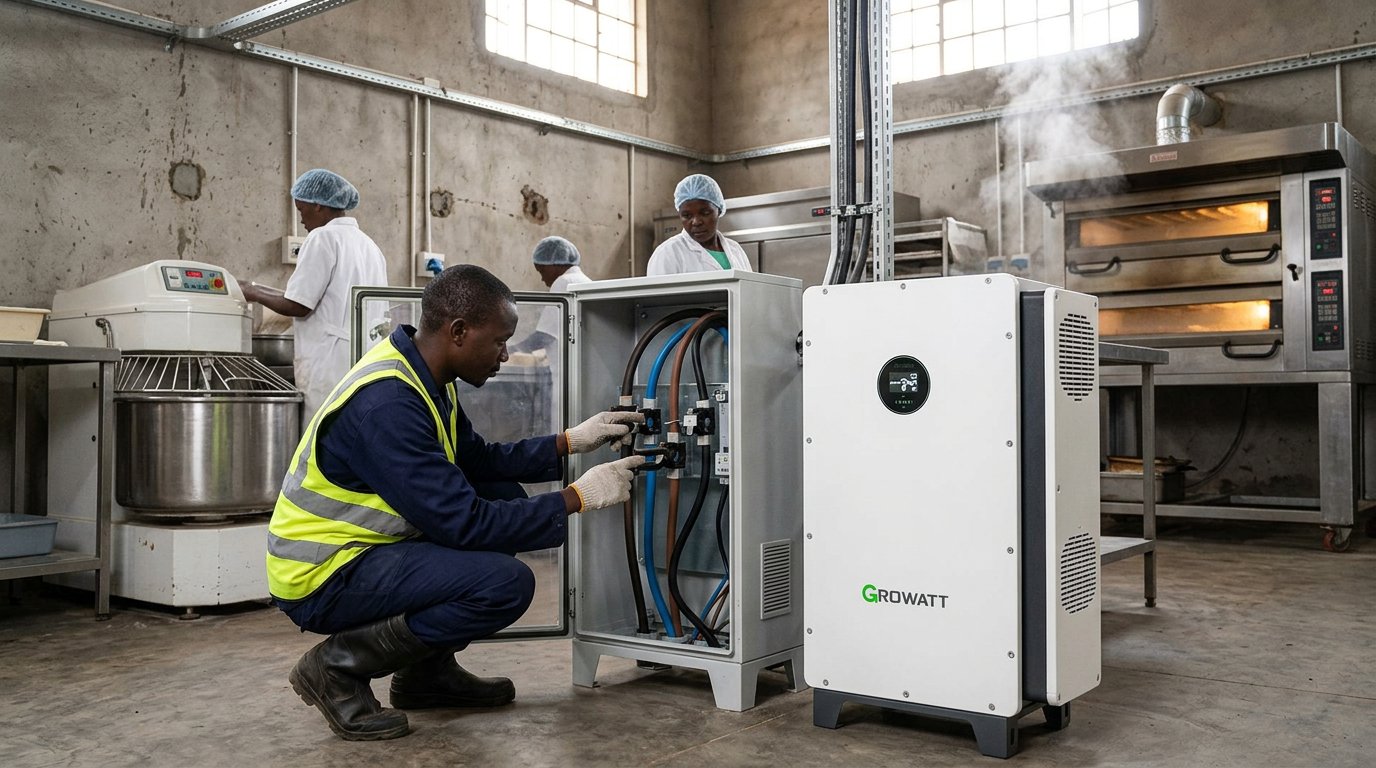
High solar production does not, on its own, show how much electricity your home or facility uses or how much it still draws from the grid. Solar system performance monitoring brings these figures together, tracking generation, consumption, battery activity and grid imports or exports so you can assess how the system operates.
Live monitoring uses inverter data, sensors and meters to record power and energy flows, then displays the results through a monitoring interface. This view can help distinguish a production issue from a change in site demand and show whether solar electricity is used as it is generated.
This article explains how monitoring tracks solar production and consumption, how components collect and display data, and how to assess panel output over time. You’ll also learn what performance patterns may indicate, why a single daily reading may not tell the whole story, and how monitoring supports informed decisions about system operation and maintenance.
Key Takeaways
- Use generation trends and fault indicators to spot possible underperformance before it leads to prolonged production losses.
- Understand how sensors, meters and inverter data show electricity flow across panels, equipment and site loads.
- Assess panel output alongside household demand and grid imports to distinguish production changes from shifts in electricity use.
- Use production and consumption records to inform energy management and determine when professional monitoring support is useful.
What is Solar Live Monitoring?
Solar live monitoring records system generation and operating data through sensors, meters and inverter communications. In Kenya, monitoring should be considered alongside applicable electrical requirements and equipment instructions. Monitoring data alone does not demonstrate compliance, and professional insights from Solar Man Power Solutions Ltd can help ensure proper system evaluation.
Detecting Faults and Underperformance
Fault detection compares measured solar generation and equipment status with expected operation to identify underperformance or faults. For example, reduced output in inverter data can prompt an investigation into shading, soiling, a damaged panel or an inverter fault. Monitoring platforms may show generation by system or string, helping narrow down the affected area. Early detection helps you assess production changes and plan a targeted response.
Alerts and Maintenance Tickets
A fault alert notifies you of an abnormal condition, while a maintenance ticket records the required follow-up. For example, an inverter error alert can be logged with its time, equipment status and production impact, then assigned for technical assessment. Linking alerts to a maintenance workflow helps distinguish an isolated warning from a recurring fault. The recorded history gives technicians a basis for inspecting equipment and documenting corrective work.
Monitoring Apps in Kenya
Professionals can use an inverter manufacturer’s app or web portal, or a compatible cloud monitoring platform. The right option depends on inverter compatibility, connectivity and the information required. No particular app should be treated as a Kenya-wide regulatory requirement. Monitoring scope depends on system size, measurement points, connectivity, reporting needs and fault follow-up. These factors shape the monitoring setup, equipment and analysis required.
Solar monitoring can help identify underperforming strings, soiling, shading and inverter faults. This may help you address issues that could affect system uptime and production. It can also reveal faults and inefficiencies, helping users make informed energy management decisions. Web and mobile dashboards can present system insights, reports and alerts.
Monitoring architecture, sensors, meters and data acquisition
A photovoltaic monitoring system links field measurements and inverter data to a platform for analysis. The performance ratio compares measured output with expected output. There is no universal ratio or fixed efficiency loss, because shading, soiling, temperature, system design and operating conditions affect results.
Sensors, Meters, and Inverter Data
Sensors and meters measure voltage, current and energy flow at selected points, such as inverter outputs, grid interconnections and critical loads. The inverter provides production and operating information, while meters record electricity moving through circuits. Together, these inputs distinguish panel-side direct current from alternating current serving equipment or entering the grid. Meter placement determines which flows the platform can report, so the design should match the site’s measurement needs.
Historical Data Logging
Data acquisition transfers readings through hardwired connections or cellular- and Wi-Fi-enabled devices. A cloud platform can store records for later review. Historical logs let analysts compare daily and seasonal generation, energy yield, power factor and power quality. For example, a recurring output drop under similar operating conditions can be distinguished from a one-off fluctuation. This context supports decisions based on trends rather than isolated readings.
Analytics, Benchmarking and Anomaly Detection
Analytics organize recorded measurements to identify deviations and compare system operation over time. Depending on the monitoring setup, platforms can report different aspects of system performance at different levels. A professional can compare these records with expected system output and investigate unusual changes. For example, a shift limited to one string calls for a different investigation than a site-wide decline in generation. This helps identify emerging performance issues.
Cloud-based platforms can store and analyze data. System data may be available 24/7, depending on the monitoring platform and connectivity. They can log measurements at interconnection points, inverter outputs and critical loads, forecast future output, analyze historical performance, and track daily and seasonal trends.
How Can a Professional Assess Whether My Solar Panels Are Producing Enough Electricity?
A professional compares recorded solar production with expected output, site conditions and electricity use. In Kenya, inverter records and production meters show generation, while consumption data reveals how much power the property imports from the grid.
Assessing Electricity Production
Production assessment compares measured energy with the system’s expected generation under its design and operating conditions. This helps establish whether the system is meeting the property’s requirements. A professional reviews output over time alongside household or facility demand, battery charging and grid imports. Using solar electricity as it is generated can support bill savings, while export records alone do not show the value of solar power consumed onsite. According to renewable energy specialists like MarGav Solar, understanding this balance between onsite generation and direct consumption is fundamental to evaluating actual cost reductions.
Signs of Poor Performance
Persistent output below expected levels, inverter fault codes, unexpected grid imports and changes in battery charging can signal poor performance. A professional reviews detailed production and consumption records, then examines inverter status and relevant electrical measurements to narrow down the cause. This comparison helps separate reduced generation from increased demand. A higher electricity bill can prompt an assessment, but the bill alone cannot show whether panels are underproducing.
Weather, Shading, Dust, and Temperature
Environmental conditions affect the sunlight reaching panels and the electricity they produce. Cloud cover can reduce available irradiance, while nearby trees or structures may shade panels during part of the day. Dust on panel surfaces can obstruct sunlight, and elevated panel temperatures can affect output. A professional considers these conditions alongside recorded generation to assess whether a change reflects normal operation or warrants further investigation. This context makes production comparisons more useful as weather and site conditions change.
Solar production and consumption tracking
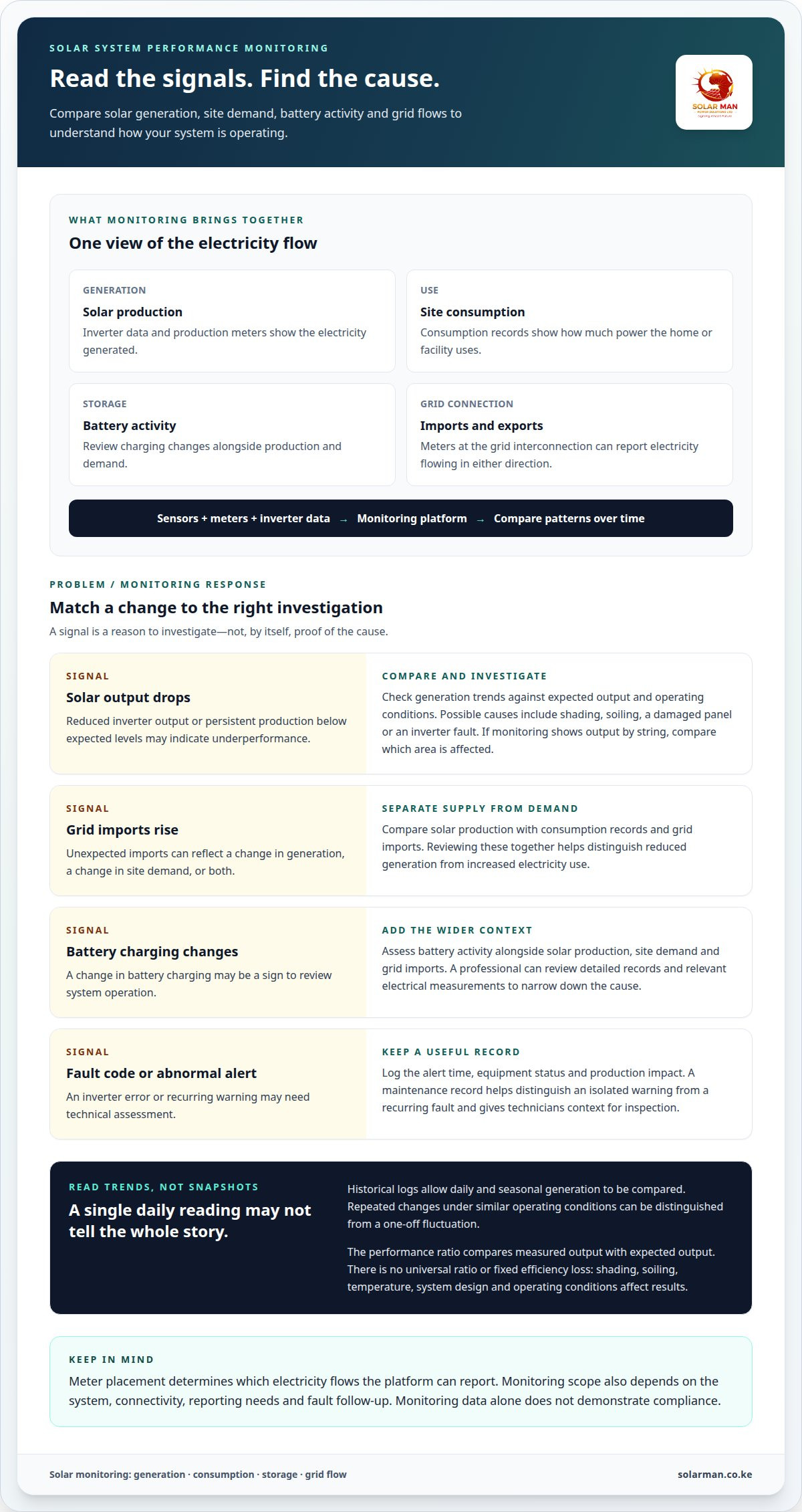
Solar production and consumption tracking puts energy production alongside site demand, battery activity and grid exchange. Solar system performance monitoring makes the distinction visible: panels may generate electricity while a facility still imports power during periods of high demand. A monitoring platform combines inverter readings with meter data to show when solar energy serves loads, charges storage or flows to the grid. This gives you a picture of system operation, not just a generation total.
Hardware determines which flows the software can display. A production meter records solar generation, while a consumption meter records electricity used onsite. Grid measurements show imports and exports; battery data identifies charging and discharging. For example, a site can distinguish solar power used directly from surplus energy stored or exported. These recorded values help explain system operation under different demand conditions.
Tracking is more useful when you compare records from similar operating periods. Solar system performance monitoring can help a commercial site assess whether daytime demand aligns with solar production, while a household can compare evening consumption with battery discharge. Monitoring software can retain historical data and display daily or seasonal patterns. These comparisons help separate changes in production from changes in occupancy, equipment schedules or electricity use. For facilities exploring broader commercial solar design and energy management strategies, practical guides such as txensolar.com provide useful industry frameworks.
Using solar electricity as it is generated can support bill savings. Tracking can show the share of solar energy used onsite, imported from the grid or exported, helping you assess how system operation aligns with demand. If imports remain high during strong production, load timing or system configuration may warrant review. Generation alone is not the key measure; what matters is how effectively it serves actual site needs.
Solar Man Power Solutions: Energy Audits, Monitoring & Energy Management
Solar Man Power Solutions Ltd provides Energy Audits, Monitoring & Energy Management to help you interpret system output alongside site energy use. This support is useful when production records, grid imports, battery operation or changing demand make it difficult to assess system performance. Analysis connects operating data with the energy requirements of your home, institution or business.
For an existing installation, monitoring can bring generation, consumption and equipment operation into clearer view. An energy audit assesses how electricity is used and can help identify where demand patterns differ from solar production. Together, these services can inform practical energy management decisions, such as reviewing when major loads operate or whether recorded grid imports align with expected site demand.
Where monitoring points to a design or capacity mismatch, Solar PV System Design & Installation provides a way to assess the system as a whole. Energy Storage Systems (ESS) and Hybrid, Grid-Tied & Off-Grid Solar Solutions may also be relevant when storage, grid connection or operating requirements are part of the assessment. The appropriate scope depends on site conditions, energy use and the existing system.
For commercial and institutional users, monitoring records can support operational reviews by showing how solar generation corresponds with demand profiles. For households, production and battery data can clarify how the system serves daily use. Professional input is especially relevant when output patterns change, grid imports remain high or system operation needs a structured review.
Contact Solar Man Power Solutions Ltd to discuss monitoring and energy management for your system.
Frequently Asked Questions
How Does It Work?
Solar system performance monitoring collects readings from the inverter, sensors and meters, then presents them through a display or software platform. The data can show solar generation, site demand, battery activity and grid exchange. For example, a professional can compare a drop in inverter output with equipment status to distinguish a data interruption from a possible production issue.
How often should a professional check my solar panel performance?
A professional should review performance data regularly and assess the system when output patterns change or an alert appears. A review after installation or system upgrades can also establish whether readings reflect the intended configuration. For a commercial site, changes in operating hours or major equipment loads are good reasons to reassess production and consumption together.
What does solar system performance monitoring measure?
Depending on the installed meters and data points, monitoring can measure energy yield, voltage, current, power quality and power factor. In a system with storage, records can also show battery state of charge and charging or discharging activity. These measures help distinguish an electrical operating change from a shift in site demand or energy storage behaviour.
How do I compare actual solar output with expected generation?
A professional compares recorded output with the system’s design expectations for the same operating period, taking season, site conditions and system configuration into account. They also review inverter availability and any gaps in recorded data. For example, treating a cloudy period and a clearer period as identical conditions can lead to a misleading assessment of system performance.
How often should solar panels, batteries, and inverters be checked?
Inspection frequency should reflect equipment guidance, operating conditions and the system’s maintenance plan. Monitoring records can help inform the schedule: recurring inverter alerts, unusual battery behaviour or a change in panel output may warrant an earlier professional inspection. Regular reviews also help identify whether a performance change is isolated to one component or affects the wider installation.
What steps should a professional take if solar monitoring shows low output?
A professional first checks whether monitoring data is current and whether the inverter reports an operating fault. They then compare generation records with expected operation and review relevant electrical measurements. If the data points to a need for further investigation, the assessment can examine panel condition, shading, soiling, connections and system configuration. The findings guide any required maintenance or corrective work.
Disclaimer
**Disclaimer**
The information published on this website is provided by Solar Man Power Solutions Ltd for general informational and educational purposes relating to solar energy, renewable energy systems, power backup, energy storage and related technologies.
While we make every effort to ensure that the information is accurate, reliable and up to date, product specifications, technical details, prices, availability and system configurations may change without prior notice. Information provided in our articles, guides and product descriptions should not be considered a substitute for a professional site assessment, technical evaluation or customized quotation.
**Solar System Performance:** Actual solar system performance, energy generation, battery backup duration and savings depend on several factors, including geographical location, weather conditions, equipment specifications, installation quality, energy consumption patterns and system maintenance. Any performance figures or estimated savings are indicative and are not guaranteed results.
**Product Information:** Product images, descriptions, specifications and technical information are provided for reference. Manufacturers may update product designs, specifications and features from time to time.
**Pricing and Quotations:** Prices, promotions and product availability displayed on this website are subject to change. Final project costs and system recommendations are determined following an assessment of the customer's requirements and site conditions.
**Professional Installation:** Solar installations and electrical systems should be designed, installed and commissioned by appropriately qualified professionals in accordance with applicable Kenyan laws, regulations and technical standards.
**External Links:** This website may contain links to third-party websites for additional information. Solar Man Power Solutions Ltd is not responsible for the content, accuracy or privacy practices of external websites.
By using this website, you acknowledge that the information provided is for general guidance and that any purchasing, installation or investment decision should be based on appropriate professional advice and an assessment of your specific requirements.
For technical assistance, product enquiries, quotations or professional solar energy solutions, please contact Solar Man Power Solutions Ltd through our official communication channels.
**Solar Man Power Solutions Ltd**
Reliable Solar & Energy Storage Solutions for East Africa.
Website: https://solarman.co.ke