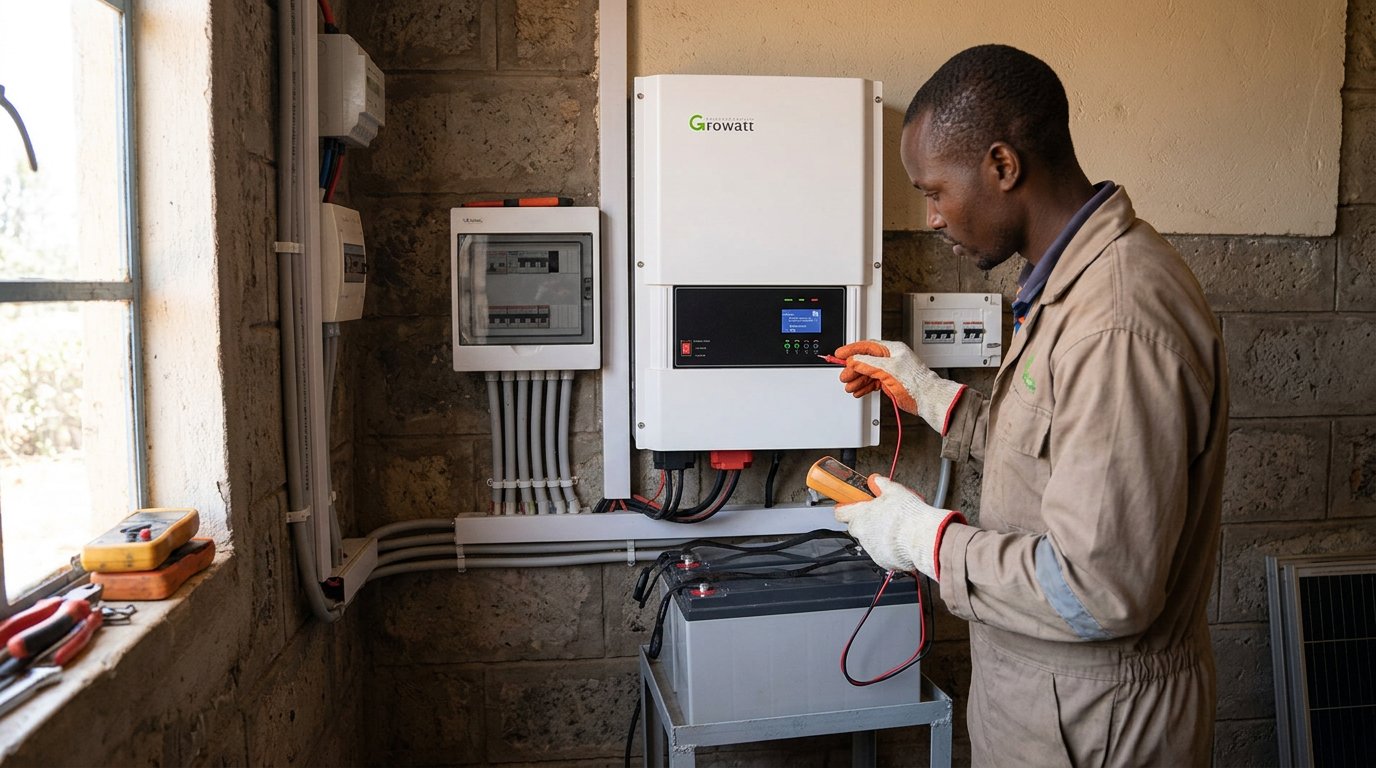
An inverter warning or shutdown does not automatically mean the inverter has failed. Grid conditions, battery communication faults, solar array issues, overheating, or electrical connections can produce similar symptoms, so solar inverter repair Kenya should begin with a system-level diagnosis. You may be tempted to reset equipment or inspect wiring, but solar direct current can remain hazardous in daylight; limit your checks to visible status indicators, displayed error codes, monitoring records, and accessible breakers, and leave internal or live-circuit work to qualified technicians. This guide explains which symptoms need professional assessment, why technicians test the inverter alongside the batteries, solar panels, and electrical connections, and what to record before arranging an inspection, including when the fault began and whether it followed heavy rain or a grid interruption.
Key Takeaways
- Persistent warnings, unexpected shutdowns, unusual sounds, or unfamiliar smells are reasons to arrange a professional assessment.
- Solar inverter repair Kenya should start by checking the connected solar array, batteries, and electrical connections, rather than assuming the inverter is the source of the fault.
- Record the displayed warning, when the issue occurs, and any recent changes to help technicians assess the system.
- Keep clear of exposed conductors and inverter interiors. Professional testing can help determine whether repair, replacement, or wider system maintenance is appropriate.
What symptoms indicate a solar inverter may need repair in Kenya?
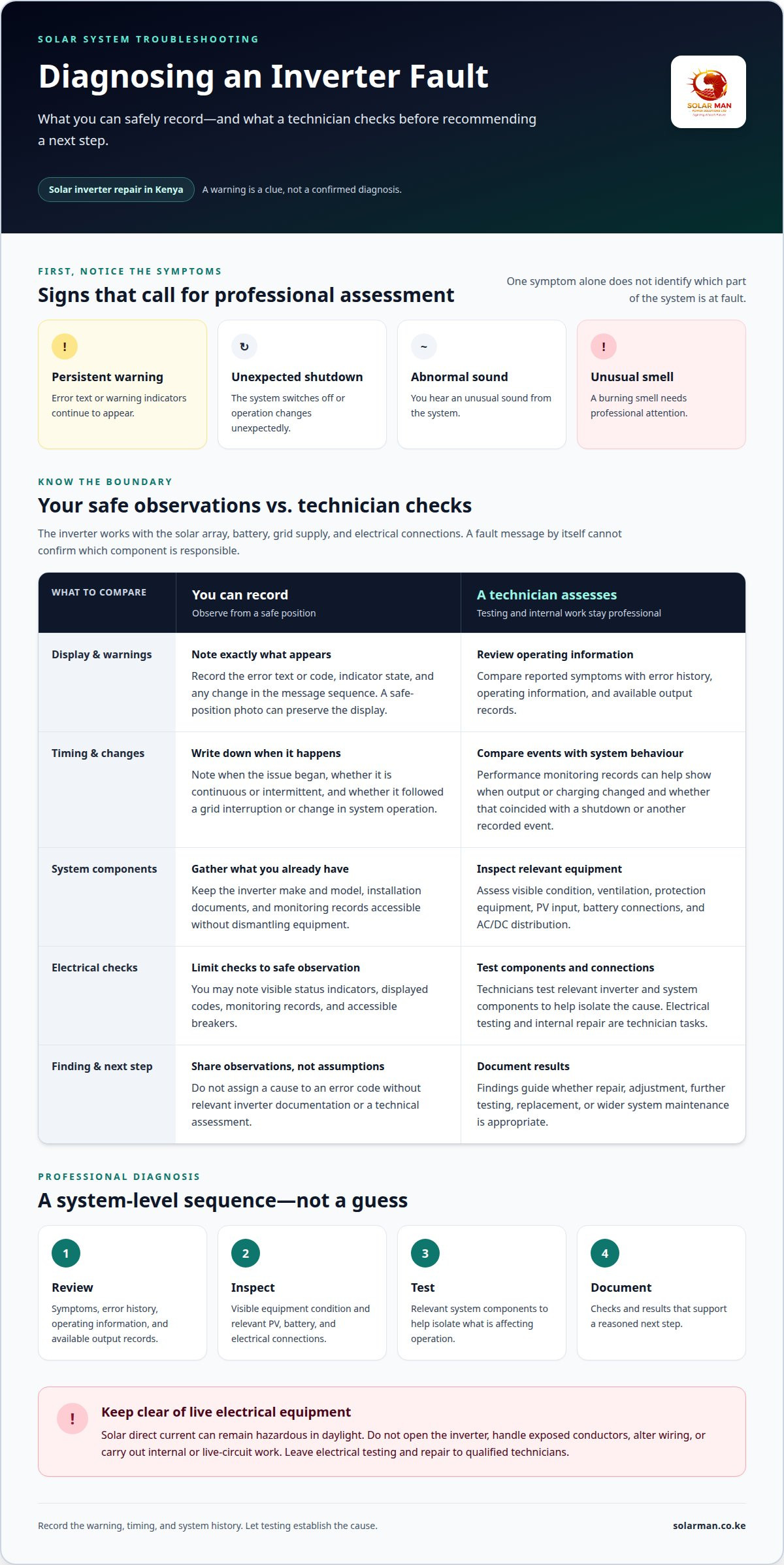
A solar inverter is a device that converts direct-current electricity from solar panels into alternating-current electricity. Designs differ in how they manage solar input and power conversion, as outlined in this overview of solar photovoltaic inverters. Persistent error text or warning indicators, unexpected shutdowns, abnormal sounds, or an unusual smell indicate that the system needs attention.
A warning is not a confirmed diagnosis. The inverter works with the connected PV array, battery, grid supply, and electrical connections, so an error display alone cannot identify which component is at fault.
Which inverter warning signs should you record?
Record the exact error text, indicator state, and when the issue first appeared. Note whether it happens continuously or intermittently, and whether it followed a change such as a grid interruption or a shift in system operation. If the display changes, note the sequence and timing of the messages. These details help a technician compare the symptom with system behaviour. Don’t assign a cause to an error code without the relevant inverter documentation or a technical assessment.
When may the fault involve another system component?
Reduced solar output or limited battery charging can result from issues beyond the inverter. The solar array may not be supplying the expected input, a battery or its connections may affect charging, or a grid supply condition may prompt the inverter to disconnect. Loose or damaged electrical connections can also affect operation. Each possibility requires assessment rather than assumption.
If you notice a burning smell, treat it as more than a routine display warning and arrange a professional assessment. Don’t open the inverter or touch exposed conductors. For solar inverter repair Kenya, a system-level inspection can distinguish an inverter fault from an external condition and guide the next step.
How is a solar inverter fault diagnosed before repair?
Effective diagnosis follows a sequence: review the reported symptoms and system records, inspect the installation, test relevant components, and document the findings. This helps determine whether the inverter, solar input, battery connections, or AC/DC distribution is affecting operation. Performance monitoring records can show when output or charging changed and whether the change coincided with a shutdown or another recorded event.
A fault message identifies an operating condition, but it does not establish by itself which component has failed.
- Review symptoms and records: Compare the reported issue with error history, operating information, and available output records.
- Inspect the system: Assess visible equipment condition and relevant PV, battery, and electrical connections.
- Test components: Technicians check the relevant inverter and system components to help isolate the cause.
- Document findings: Record the checks and results to support a reasoned next step.
What does a system-level inverter inspection examine?
An inspection may cover the inverter’s visible condition, ventilation, connections, protection equipment, and operating information. It can also include PV input, battery connections, and AC/DC distribution, since an issue in one part of the system can affect another. Electrical testing and internal repair are technician tasks. Don’t open the enclosure or handle conductors to investigate a fault.
How does diagnosis guide repair or replacement?
Test results help determine whether the appropriate next step is repair, an adjustment, further testing, replacement, or wider system maintenance. The finding depends on the equipment condition and evidence from the connected system, so a warning alone cannot establish the remedy or timeframe. For solar inverter repair Kenya, this assessment-based approach avoids treating every shutdown as an inverter hardware failure.
Diagnosis is part of ongoing care. The solar operations and maintenance guide explains how component checks fit into system upkeep. Solar Man Power Solutions Ltd provides inspection and troubleshooting support for solar systems across Kenya. Details about the service are available through Solar Man Power Solutions Ltd.
What can you safely do before arranging solar inverter repair?
Before arranging an assessment, collect useful information without opening or handling electrical equipment. The inverter display, timing of symptoms, and system records can help a technician understand what changed and plan an inspection.
- Note the display: Record the exact message or code and indicator state. A clear photo taken from a safe position can preserve what appeared.
- Record the timing: Note when the symptom began, whether it is continuous or intermittent, and whether it followed a change in system operation.
- Gather documentation: Find the inverter make and model, available installation documents, and performance monitoring records. Keep this information accessible without dismantling equipment.
Safe observation is not electrical repair work. Leave testing, wiring, and internal inspection to qualified technicians.
What information helps a technician assess the fault?
Alongside the displayed message, note any recent changes, such as altered system use or an interruption to power, without assuming they caused the fault. Records showing solar output or battery behaviour can help indicate when operation changed. Keep the system documentation together for the assessment. The solar system maintenance guide also explains the role of ongoing care.
Which troubleshooting actions should you avoid?
Don’t remove inverter covers, alter wiring, handle exposed conductors, bypass protective devices, or attempt component-level electrical tests. Avoid repeatedly resetting a system that continues to fault, since a reset does not establish the cause. If you notice a burning smell, visible damage, or exposed wiring, keep clear and seek qualified assistance rather than approaching or touching the equipment.
These observations can support a safer, more informed solar inverter repair Kenya assessment while leaving electrical work to technicians. Service information is available from Solar Man Power Solutions Ltd.
How can professional solar inverter repair support restore system operation?
Professional assessment connects the reported symptom to findings from the inverter and the equipment around it. Inspection and troubleshooting can identify the fault condition, while a repair assessment sets out the appropriate next action. That may involve repair, replacement, an adjustment, further testing, or wider solar system maintenance. The evidence guides the decision rather than an assumption based on a warning display.
What should a repair assessment clarify?
You should receive an account of the observed fault, relevant system findings, and the recommended next step. Technicians may assess the inverter alongside PV input, battery connections, and AC/DC distribution, then carry out system testing. System testing checks that equipment and connections function correctly and safely. Its findings help establish whether the original symptom has been addressed or whether additional assessment is needed.
How does repair fit into wider solar maintenance?
Inverter troubleshooting can reveal a need to inspect other components, review performance monitoring records, or consider a system upgrade. If the installation condition is relevant to the findings, the solar installation guide provides related context. Maintenance is part of diagnosis: checking connected equipment can help distinguish an isolated inverter issue from a broader system concern.
Solar Man Power Solutions Ltd provides inspections, troubleshooting, repairs, performance monitoring, and system upgrades for solar PV and energy-storage systems across Kenya. Its qualified technicians bring more than 10 years of experience in Kenya’s energy market and take a system-level approach to residential, commercial, farm, and institutional installations. The assessment findings guide the next step; they do not predetermine whether repair or replacement is appropriate.
For solar inverter repair Kenya, share the fault details with Solar Man Power Solutions Ltd when arranging an inspection and troubleshooting assessment.
Plan the next step with a system-level assessment
Use the interruption as an opportunity to consider how your power needs may change over time. If essential equipment, operating hours, or backup priorities have shifted, include those requirements in future system planning so maintenance or upgrade decisions reflect how you use electricity now. A clear record of these priorities can also help frame discussions about your solar installation beyond the immediate solar inverter repair Kenya issue.
Solar Man Power Solutions Ltd’s qualified technicians bring solar engineering experience to residential, commercial, and institutional projects across Kenya. Their technical perspective can support informed decisions about the system’s next stage without presuming a particular repair outcome.
Arrange a solar inverter troubleshooting and repair assessment with Solar Man Power Solutions Ltd.
Frequently Asked Questions
Is an inverter warning code enough to confirm that the inverter needs repair?
No. Treat the code as a reference tied to the inverter’s make and model, and consult the relevant equipment documentation for its stated meaning. If the display shows an operating mode or a second status message alongside the code, include that context when describing the fault. Avoid assigning a cause from the code alone, since its interpretation depends on the specific equipment.
Can a solar inverter fault affect the battery or solar panels?
It can affect how power is converted or managed, but a change in system operation does not establish physical damage to either component. A panel can look intact while its electrical contribution is affected, and a battery’s role depends on the system configuration. Don’t climb onto the roof or open equipment to investigate. Keep your observations to accessible displays and system records.
Should I reset my solar inverter when it displays a fault?
Only follow a reset procedure if the manufacturer’s documentation describes it as a user action. Before doing so, capture the displayed code and any accompanying status information, since clearing a display may remove useful context. Don’t operate switches or isolators unless the documentation clearly identifies them as user controls. If you’re uncertain about a step, leave the equipment untouched for technical assessment.
Can a solar system keep operating while its inverter is being repaired?
There is no universal answer, because the available supply depends on your system configuration and the work required. For practical planning, identify which essential loads currently have power and whether another normal supply is available. Share that information when arranging solar inverter repair Kenya so the assessment can address operational needs as well as the equipment fault. Don’t make temporary wiring changes.