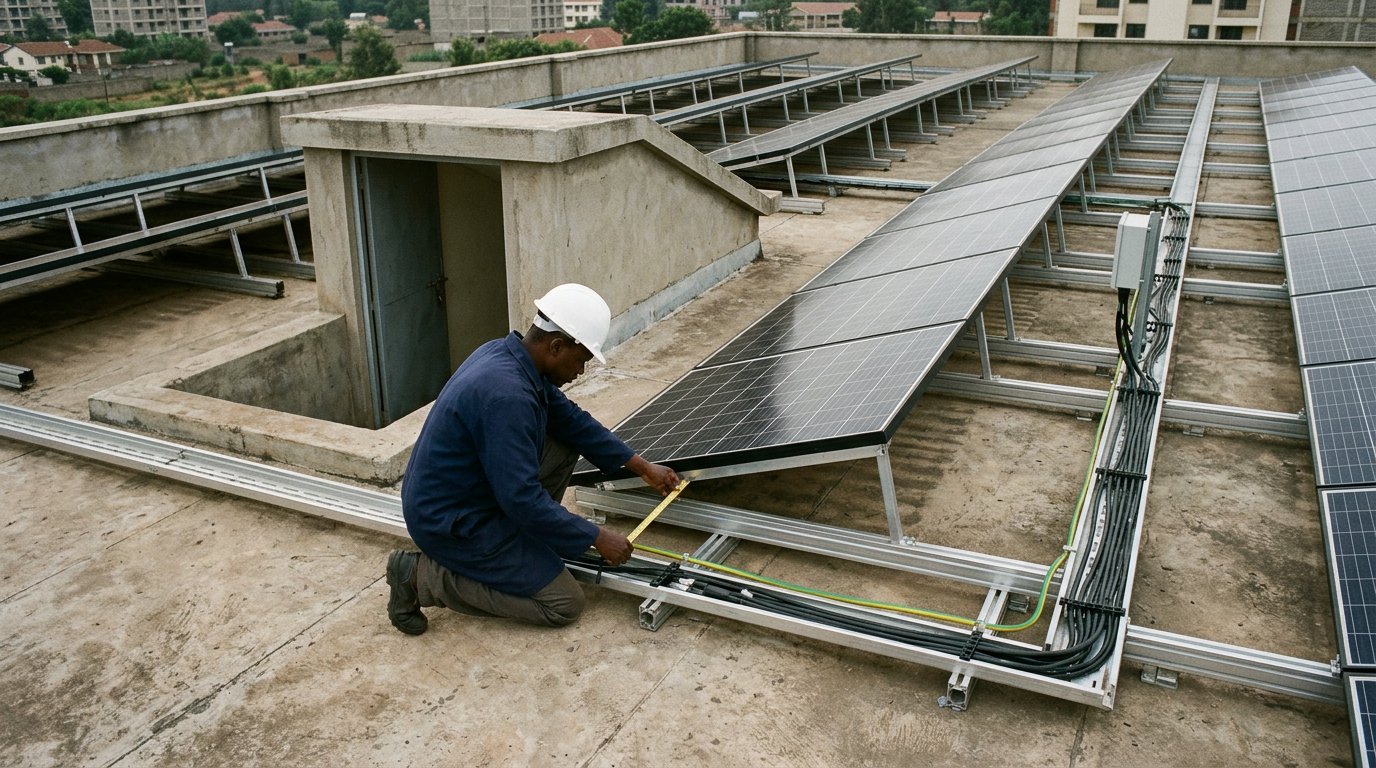
A reputable solar installer is assessed not only by its equipment selection, but also by the engineering behind the design, relevant credentials and licensing, workmanship controls, and a practical maintenance plan for safe, dependable operation. In Kenya, solar engineering consultancy connects these considerations to the site, energy needs, system configuration, and operational priorities.
This article explains how consultancy supports project design, installer credential checks, applicable licensing considerations, workmanship review, and maintenance planning for residential, commercial, and institutional solar installations, while outlining the information that informs engineering and how design, installation, commissioning, and ongoing system care fit together.
Key Takeaways
- Define the project’s energy needs and operating priorities before settling on a solar configuration.
- Understand how site conditions and system design shape the installation and its intended operation.
- Assess installer credentials, licensing considerations, workmanship, and maintenance as connected parts of project delivery.
- Use a consultancy’s location and service scope to determine how it can support your project across Kenya.
Residential, commercial, and institutional solar projects
Solar projects vary by site, energy demand, and the impact of a power interruption. A consultant turns these conditions into a system plan suited to a home, business, or institution.
Commercial and institutional projects
For an office, school, hospital, or industrial facility, assessment begins with energy use, operating schedules, installation space, and continuity requirements. These inputs guide system capacity and project planning. Project records and client testimonials can help you assess whether a consultancy has handled comparable sites, engineering work, and commissioning. Look for evidence of project scope and completed work rather than relying on broad claims. For a power purchase agreement (PPA) or another financing arrangement, clarify system ownership, management responsibilities, and the terms of energy supply. For school-specific considerations, see this guide to solar power for institutions in Kenya, including how school loads and storage needs shape system design.
Grid-tied, off-grid, and hybrid options
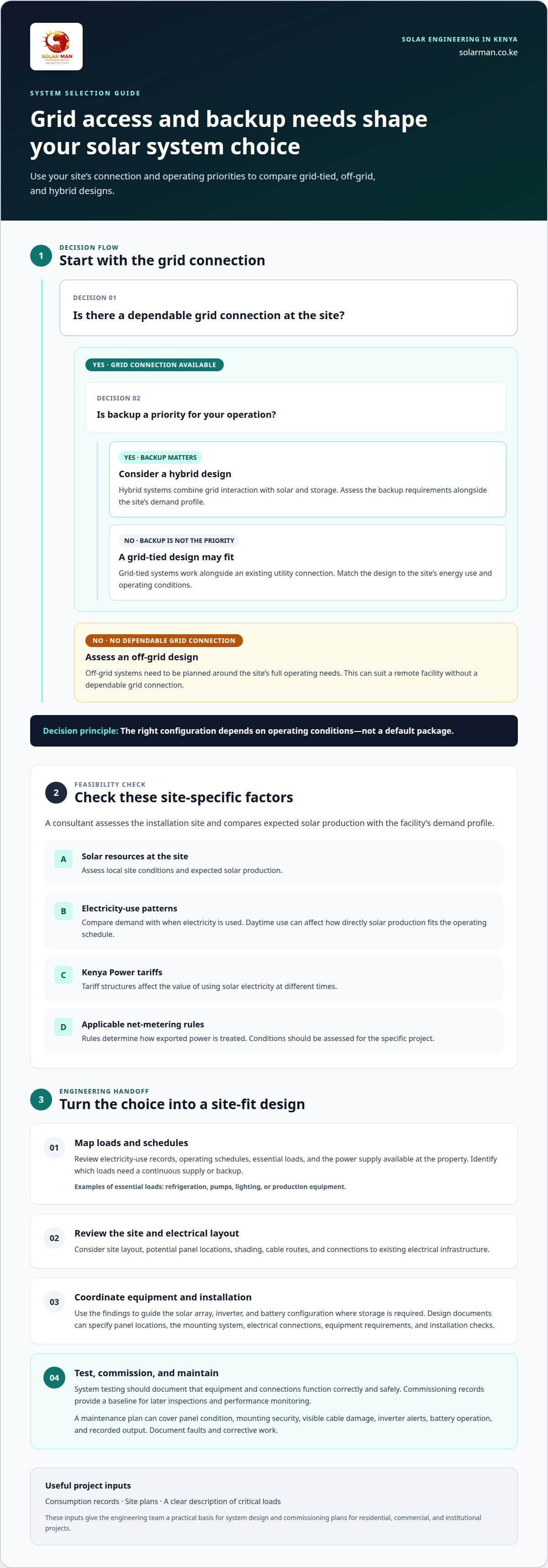
Consultants assess grid-tied, off-grid, and hybrid systems against your grid connection, demand profile, and backup requirements. Grid-tied designs work alongside an existing utility connection; off-grid systems must be planned around the site’s full operating needs. Hybrid designs combine grid interaction with solar and storage. A remote facility without a dependable grid connection may suit an off-grid design, while a grid-connected business prioritising backup may consider a hybrid configuration. The right choice depends on operating conditions, not a default package.
Project feasibility factors
Feasibility depends on site-specific solar resources, electricity-use patterns, Kenya Power tariffs, and applicable net-metering rules. A consultant assesses the installation site and compares expected solar production with the facility’s demand profile. For example, a facility that uses more electricity during daylight can assess how direct solar use fits its schedule. Tariff structures affect the value of using solar electricity at different times, while net-metering rules determine how exported power is treated. These factors inform the design and project assessment, without assuming conditions are the same throughout Kenya.
Solar PV system design and engineering
A solar engineering consultancy in Kenya turns a site’s electrical requirements into an engineered system plan. Design starts with the loads that must operate, their schedules, and the power supply available at the property. A home, hotel, and processing facility therefore need different design inputs.
The engineer reviews electricity-use records and identifies essential loads, such as refrigeration, pumps, lighting, or production equipment. The assessment also covers the site layout, potential panel locations, shading, cable routes, and connections to existing electrical infrastructure. These findings guide the solar array, inverter, and battery configuration where storage is required. Equipment must suit the intended arrangement, whether grid-tied, off-grid, or hybrid.
Engineering documents translate those decisions into coordinated installation work. A project design may set out:
- Solar panel locations and the mounting system approach.
- Electrical connections between the array, inverter, batteries, and loads.
- Equipment requirements and the intended system configuration.
- Installation and commissioning checks for the planned design.
For a facility with daytime machinery and evening security lighting, the design needs to account for when each load operates and which loads require backup. The engineer can distinguish equipment that needs a continuous supply from loads that can run during solar production. This helps define storage requirements and avoids overlooking operational needs by relying on total consumption alone.
Design review also connects drawings, equipment selection, installation sequencing, and system testing. Reviewing documented solar projects in Kenya gives you examples of project contexts and completed work. For your own project, provide consumption records, site plans, and a clear description of critical loads. Those inputs give the engineering team a practical basis for developing a system design and commissioning plan.
Solar licensing, certifications, workmanship, and maintenance
Credential checks help you assess who is responsible for design and installation. Kenya’s Energy and Petroleum Regulatory Authority maintained a solar photovoltaic contractor and vendor register as at 19-07-2021, according to the Energy and Petroleum Regulatory Authority. That date matters: the register information reflects its stated date, not necessarily a contractor’s current status. Review the applicable credentials and licensing records as part of project due diligence, and identify who holds responsibility for electrical design, installation, and commissioning.
Assess workmanship by reviewing installation records and inspecting completed work. Check that equipment matches the design, electrical connections are orderly, and the mounting system suits the site. System testing should document that equipment and connections function correctly and safely. Commissioning records provide a baseline for later inspections and performance monitoring. For example, recorded inverter settings and test results can help distinguish a system fault from a change in site demand.
Technical risks include design errors, unsuitable equipment, and installation defects that affect operation or safety. Financial risks include untested production assumptions and unclear project responsibilities. Maintenance risks include missed inspections and unresolved faults. A documented design, clear project scope, commissioning records, and planned maintenance help manage these risks throughout the project lifecycle.
Solar system maintenance should reflect the design and operating conditions. An inspection plan can cover panel condition, mounting security, visible cable damage, inverter alerts, battery operation, and recorded output. The maintenance team can compare current readings with commissioning records, then document faults and corrective work. Cleaning needs vary with site conditions, including dust and nearby activity; inspection findings help determine the appropriate care.
For a commercial site in Kenya, assign maintenance responsibilities before handover and keep equipment records, test results, and service notes together in a project file. This gives facilities teams a consistent basis for tracking changes, planning maintenance, and escalating faults through the appropriate technical channel.
Which solar engineering consultancies operate in Kenya, and where are they based?
Kenya’s solar consultancy market includes engineering-led EPC teams, specialist design consultants, and installers with engineering capabilities. Office locations vary, and an address alone does not show whether a team can support your site, project scope, and delivery requirements.
For a project anywhere in Kenya, assess the consultancy’s delivery model alongside its location. Establish how the team handles site assessment, design coordination, installation oversight, commissioning, and follow-up. Travel planning and site access should fit the work programme, particularly for facilities far from the consultancy’s main office.
Compare firms by the engineering responsibilities they take on, not by office location alone. A residential project may need load assessment, system design, and installation coordination. A commercial or institutional project may also require electrical integration, phased delivery, and coordination with facilities staff. Ask for examples that identify the project type, the consultancy’s role, and the work completed.
- Project fit: Look for experience relevant to your building, operating schedule, and system configuration.
- Delivery scope: Establish who handles design, procurement coordination, installation oversight, and commissioning.
- Site coverage: Clarify how visits, technical coordination, and maintenance are arranged for your location.
- Evidence: Review project records and client testimonials for details about scope and delivery.
These criteria help distinguish a design-only engagement from a team responsible for engineering and project delivery. They also help you assess whether the consultancy can coordinate work around your site’s operating needs. For example, a remote facility with critical daytime loads needs a delivery plan that accounts for site access, installation sequencing, and commissioning.
Discuss your solar project requirements to identify the engineering scope and site coordination your project needs.
Solar Man Power Solutions Ltd
Solar Man Power Solutions Ltd supports project owners who need engineering coordination for residential, commercial, or institutional solar installations. Its services include Solar PV System Design & Installation, Energy Storage Systems (ESS), Hybrid, Grid-Tied & Off-Grid Solar Solutions, and Power Backup & Critical Systems.
Turn to the team when you need to translate site requirements into a system design and installation plan, or align storage and backup with operating needs. Share energy-use information, site details, and priority loads to inform project planning. The engineering scope can then address system configuration, installation, and commissioning in line with your project requirements.
Contact Solar Man Power Solutions Ltd to discuss your solar project requirements.
Set a clear direction for your solar project
Start by defining what the installation must support and how project decisions will be managed. A concise brief covering your site, operating priorities, and delivery expectations gives the engineering team a practical basis for discussion. It also helps you assess whether the proposed scope addresses design, installation, and ongoing system needs.
When engaging a solar engineering consultancy in Kenya, focus on how its technical recommendations meet your facility’s operating requirements. Solar Man Power Solutions Ltd’s engineering team supports project planning through solar PV design and installation, energy storage, and hybrid, grid-tied, or off-grid systems. These capabilities help shape an approach suited to your project.
If you are ready to discuss the project scope and next steps, contact Solar Man Power Solutions Ltd. A clear starting brief can help move your project planning forward.
Frequently Asked Questions
How do project requirements shape solar system design in Kenya?
Solar system design in Kenya depends on system capacity, equipment, battery storage, site conditions, and installation scope. A home needing backup for evening appliances has different design requirements from a business that uses most of its power during daylight. Project assessment establishes these needs before the system configuration and work are defined. Share your energy-use information and project requirements with the engineering team to support system planning.
What services do solar engineering consultancies in Kenya provide?
Solar engineering consultancies can assess energy use, prepare system designs, coordinate installation, and support commissioning and maintenance. For a commercial facility, this may include reviewing operating loads and integrating solar with existing electrical infrastructure. Solar Man Power Solutions Ltd provides solar PV design and installation, energy storage, hybrid, grid-tied and off-grid systems, and power backup solutions. The appropriate scope depends on your site and operating needs.
What qualifications and licenses are required for solar consultants and engineers in Kenya?
Required qualifications and licensing depend on each professional’s responsibilities and the project scope. Design, electrical installation, commissioning, and contractor management may involve different roles. Establish who is accountable for each activity and identify the relevant professional credentials and contractor registrations. For example, when a system connects to existing electrical infrastructure, clarify who is responsible for that interface and for the solar equipment.
What Kenyan regulations, permits, and standards apply to solar installations?
Applicable regulations, permits, and standards depend on the project design, location, building work, electrical integration, and grid connection. The project team should establish which approvals and inspections apply before installation and record these requirements in the project documentation. For a grid-connected system, the proposed connection arrangement is a key consideration. Keep approved drawings, equipment records, and commissioning documents available for handover and future system work.
How do I choose a reliable solar engineering consultant in Kenya?
Choose a consultant who can define the engineering scope, explain project responsibilities, and provide relevant records of completed work. The proposal should address your operating requirements and site constraints rather than rely on a generic system configuration. Solar Man Power Solutions Ltd provides design and installation, energy storage, and grid-tied, hybrid, and off-grid solutions. Discuss how the proposed scope fits your project before settling on a system approach.
How does a solar engineering consultancy plan and design a commercial or industrial solar project in Kenya, and what information should you provide?
Planning typically starts with electricity-use records, operating schedules, equipment details, site plans, and backup priorities. The engineering team uses these inputs to assess load profiles, installation areas, electrical integration, and system configuration. For example, production schedules can show which processes need to continue during an interruption. Include planned changes to equipment or facility operations, since these can affect future demand and design requirements.
Disclaimer
**Disclaimer**
The information published on this website is provided by Solar Man Power Solutions Ltd for general informational and educational purposes relating to solar energy, renewable energy systems, power backup, energy storage and related technologies.
While we make every effort to ensure that the information is accurate, reliable and up to date, product specifications, technical details, prices, availability and system configurations may change without prior notice. Information provided in our articles, guides and product descriptions should not be considered a substitute for a professional site assessment, technical evaluation or customized quotation.
**Solar System Performance:** Actual solar system performance, energy generation, battery backup duration and savings depend on several factors, including geographical location, weather conditions, equipment specifications, installation quality, energy consumption patterns and system maintenance. Any performance figures or estimated savings are indicative and are not guaranteed results.
**Product Information:** Product images, descriptions, specifications and technical information are provided for reference. Manufacturers may update product designs, specifications and features from time to time.
**Pricing and Quotations:** Prices, promotions and product availability displayed on this website are subject to change. Final project costs and system recommendations are determined following an assessment of the customer's requirements and site conditions.
**Professional Installation:** Solar installations and electrical systems should be designed, installed and commissioned by appropriately qualified professionals in accordance with applicable Kenyan laws, regulations and technical standards.
**External Links:** This website may contain links to third-party websites for additional information. Solar Man Power Solutions Ltd is not responsible for the content, accuracy or privacy practices of external websites.
By using this website, you acknowledge that the information provided is for general guidance and that any purchasing, installation or investment decision should be based on appropriate professional advice and an assessment of your specific requirements.
For technical assistance, product enquiries, quotations or professional solar energy solutions, please contact Solar Man Power Solutions Ltd through our official communication channels.
**Solar Man Power Solutions Ltd**
Reliable Solar & Energy Storage Solutions for East Africa.
Website: https://solarman.co.ke