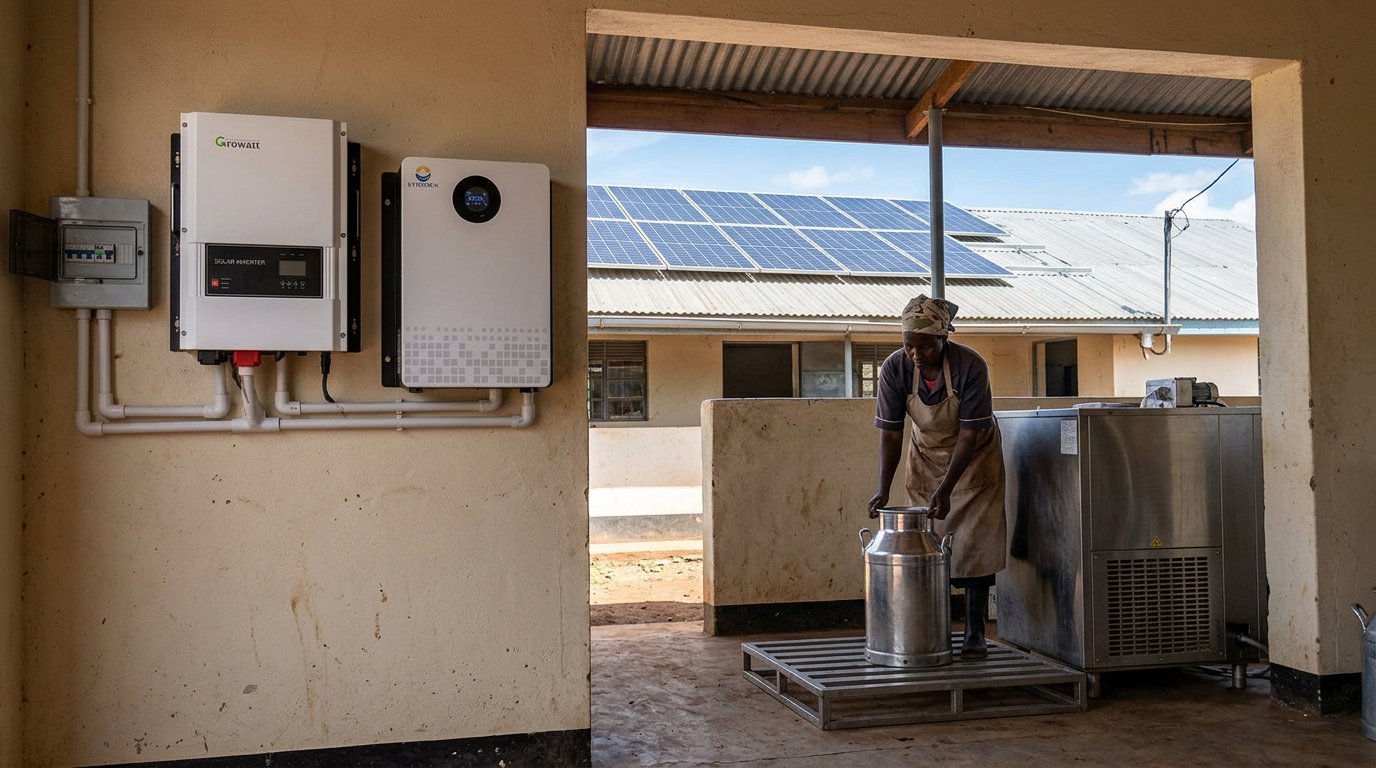
Hybrid solar systems combine solar generation, battery storage and a connection to the public electricity grid. They let you use stored solar power when panels are not producing and draw from the grid when needed. This can provide backup power while making use of solar energy during daylight.
Choosing a system involves more than selecting panels. The inverter, battery capacity, site conditions and energy use all affect system operation and installation requirements. This guide explains how hybrid systems work in Kenya, how they compare with grid-tied and off-grid setups, and which project factors shape the design and installation.
You will learn how solar power, batteries and grid supply work together, when a hybrid configuration may suit your needs, and what an engineering assessment considers for homes, businesses and institutions.
Key Takeaways
- Understand how solar generation, battery storage and grid supply work together, including what to assess when adding storage to an existing system.
- Identify the practical differences between grid-tied, hybrid and off-grid configurations based on your need for backup and grid connection.
- Learn how an inverter can manage solar energy for household use, battery charging and permitted grid export.
- See which factors shape a system’s design and installation scope, from energy demand and battery capacity to site conditions.
What is a hybrid solar system and how does it work?
A hybrid solar system combines solar panels, an inverter, batteries and a connection to the public grid. Depending on its configuration, it stores surplus solar electricity or sends it to the grid.
Hybrid systems are more complex than grid-tied setups and have finite battery storage. Batteries may not cover every load during extended periods of low solar production, so grid or generator power may be needed when storage runs low. Battery aging also reduces usable capacity over time.
Priority Logic for Solar, Batteries, Generators, and Grid
Priority logic determines the order in which solar, batteries, generators and grid supply serve loads. Solar power serves active demand first; surplus charges batteries or feeds the grid. When solar output falls, stored energy supplies loads, and grid power can take over if the batteries run low. If included in the design, a generator can serve loads or charge batteries. This sequence determines how critical equipment receives power.
System Parameters and Battery Capacity
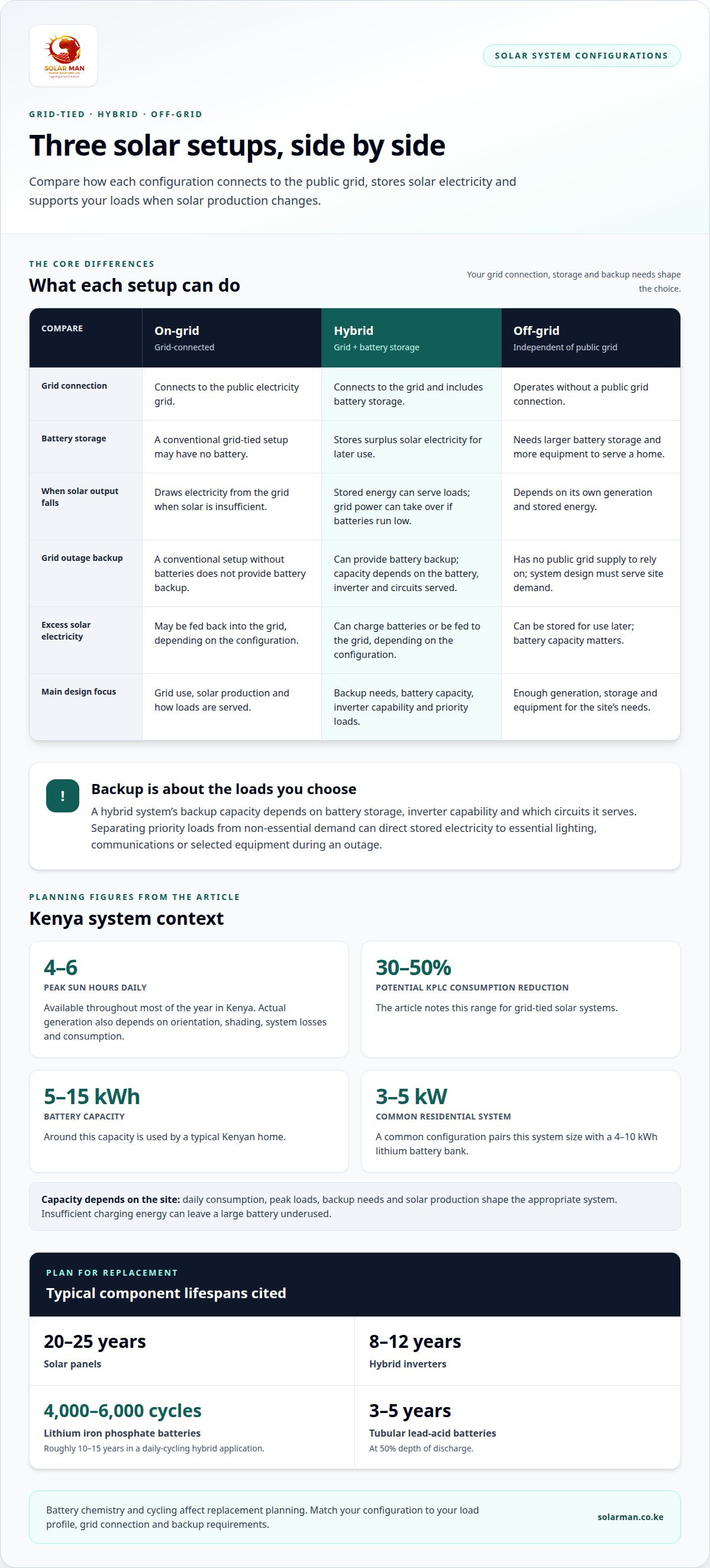
System parameters match panel production and inverter capacity to energy use and battery storage. A typical Kenyan home uses around 5 kWh to 15 kWh of battery capacity. A common residential configuration pairs a 3-5 kW system with a 4-10 kWh lithium battery bank. Daily consumption, peak loads, backup needs, and solar production shape the appropriate capacity. Insufficient charging energy can leave a large battery underused.
Retrofitting Batteries to an Existing Solar System
Retrofitting adds battery storage to an existing solar array, with inverter compatibility shaping the connection. AC coupling connects a retrofit battery to the existing 230 V AC circuit. The design also considers control compatibility, surplus electricity routing, and which loads require backup. These factors determine how the added battery integrates with the existing system.
Panel, Inverter, and Battery Lifespans
Solar panels typically last 20 to 25 years, while hybrid inverters typically last 8 to 12 years. Lithium iron phosphate batteries typically deliver 4,000 to 6,000 cycles, corresponding to roughly 10 to 15 years in a daily-cycling hybrid application. Tubular lead-acid batteries typically last three to five years at 50% depth of discharge. Battery chemistry and cycling therefore affect replacement planning.
Hybrid systems compared with on-grid and off-grid solar
These configurations differ in their grid connection, battery storage and ability to supply electricity when solar production changes. The choice affects backup, how excess generation is used, and the role of public grid supply for homes and businesses across Kenya.
Hybrid, On-Grid, and Off-Grid Differences
An on-grid system connects to the public grid, while an off-grid system operates without it. A hybrid setup combines a grid connection with battery storage. The configuration determines whether your system can draw from the grid, store solar generation or depend on its own supply.
Grid-tied solar systems can reduce KPLC consumption by 30 to 50%. Off-grid solar systems avoid reliance on public supply, but need larger battery storage and more equipment to serve a home. A hybrid arrangement adds storage while retaining a grid connection. Your load profile and backup requirements help determine which configuration fits your site.
Grid Connection and Excess Electricity
A grid connection lets an on-grid or hybrid system draw electricity from the public supply when solar generation is insufficient. Depending on the configuration, excess solar electricity can charge batteries or be fed back into the grid. This affects how much generated power is available later and how the grid supports demand when solar production falls.
A grid-tied setup without batteries relies on the grid when solar output falls. A hybrid setup can store surplus generation for later use. The arrangement also affects how the inverter manages loads, battery charging and grid exchange. These operating priorities should match your expected electricity use.
Backup Power During Grid Outages
A hybrid system can provide battery backup during a public grid outage. A conventional on-grid system without battery storage, by contrast, relies on grid supply when solar energy is unavailable. This difference matters for loads that need continuity, such as essential lighting, communications or selected equipment.
Backup capacity depends on battery storage, inverter capability, and which circuits the system serves. Separating priority loads from non-essential demand can direct stored electricity to equipment needed during an outage. A site-specific comparison can clarify this arrangement; hybrid solar system design should account for your power needs and grid connection.
Solar export limits and hybrid inverters
In Kenya, solar generation depends on array capacity and available sunlight. Kenya receives 4 to 6 peak sun hours daily throughout most of the year, but this does not translate directly into the same number of hours at full rated output. Panel orientation, shading, system losses, and household consumption affect actual electricity generated and used.
A solar inverter converts the direct-current electricity from panels into alternating-current electricity for household circuits. In a hybrid system, it also manages battery charging and interaction with the grid. Its capacity must suit the solar array and the loads it serves. An undersized inverter can limit usable output, so array and inverter ratings need to be considered together during system design.
Export limits define how much excess energy a system can send to the public grid. For example, a 10 kW solar system configured to export a maximum of 2 kW can direct about 8 kW to batteries. This illustrates how an inverter can route generation between grid export and storage when the export setting limits grid supply.
Export control can help match solar generation to site consumption. When electricity is being used while the panels produce, the system can serve that demand first. Remaining energy can charge batteries or be exported, subject to the configured limit. How energy is distributed depends on system settings, inverter capability, battery availability and demand at the time.
Array sizing begins with expected consumption and the intended share of energy from solar. Monocrystalline panels commonly used in Kenya range from 400W to 700W, so panel count and rating shape the array’s nominal capacity. A design must also account for battery charging and export settings. These parameters help the inverter coordinate solar energy with household loads and storage.
Hybrid system planning for Kenya
A professional design starts with your electricity use, operating schedule and continuity requirements. For a home, the assessment may separate everyday household circuits from equipment that needs to remain available during an outage. For a business or institution, operating schedules and critical processes help define the project before equipment is selected.
Approval requirements depend on the project’s connection to the public grid and whether the system is configured to export electricity. Identifying these factors during planning helps ensure the design reflects its intended connection and operation. Approval requirements are separate from system sizing and should be addressed during project coordination.
Professional system selection turns site information into an engineered design. The assessment considers the installation area, shading, electrical infrastructure, demand patterns and backup priorities. For an existing system, the engineer also reviews the equipment and wiring already in place. These details help determine a suitable configuration and installation scope.
During installation, the team positions and connects the designed equipment, integrates it with the building’s electrical system and tests the system. Commissioning checks that equipment and connections operate correctly and safely. The team then aligns operating priorities with the intended use, including which loads receive backup and how grid interaction is configured.
Providing a recent electricity bill, a list of major equipment, operating hours, and priority loads gives the project team useful planning information. A professional solar system assessment can bring these requirements into one design brief for your home, business, or institution.
Solar Man Power Solutions
Solar Man Power Solutions Ltd helps residential, commercial, institutional and industrial customers assess solar generation, battery storage, grid connection and backup needs. Its services include solar PV system design and installation, energy storage systems, hybrid, grid-tied and off-grid solutions, and power backup for critical systems.
Work with the team when you need a system designed around your energy use, site conditions and operating priorities. For an existing installation, the design can account for how storage and backup requirements fit the current setup. For a new project, the configuration can align panel generation, inverter capacity, batteries and grid supply with your intended use.
Contact Solar Man Power Solutions Ltd to discuss your solar system requirements.
Define Your Priorities for the Next Design
Before selecting equipment, define the operating priorities the system must meet. Specify which loads need continuity, when grid supply is acceptable, and whether stored energy should be reserved for outages or used for everyday demand. A recent electricity bill, equipment schedule and list of critical loads give the design team useful context. Revisit these priorities as household or facility operations change, rather than treating the initial design as fixed.
Solar Man Power Solutions supports this planning with Solar PV System Design & Installation, Energy Storage Systems (ESS), and Hybrid, Grid-Tied & Off-Grid Solar Solutions. Its engineering team uses your operating priorities to inform a configuration suited to your site and intended use. This gives you a clear starting point for assessing how solar generation and storage can meet your power requirements.
Contact Solar Man Power Solutions Ltd to discuss your plans for hybrid solar systems and take the next step toward a design aligned with your needs.
Frequently Asked Questions
How long do the batteries last?
Battery lifespan depends on chemistry and how regularly the battery is charged and discharged. Lithium iron phosphate batteries typically deliver 4,000 to 6,000 cycles, corresponding to roughly 10 to 15 years in a daily-cycling hybrid application. Tubular lead-acid batteries typically last three to five years at 50% depth of discharge. These figures help frame replacement planning.
I already have a regular solar power system. Can I add batteries?
Yes, battery storage can be added to an existing solar system if the design supports integration. A professional assessment reviews the installed inverter, electrical setup and intended backup loads. AC coupling is one retrofit approach, connecting storage to the existing alternating-current circuit. The system configuration determines how the new battery interacts with solar generation and household circuits.
When is a hybrid system useful?
A hybrid configuration can suit you if you want solar generation and grid connection alongside battery backup. For example, a household may need selected circuits to stay powered during outages while relying on the grid for other needs. The key is to decide which loads matter during an interruption and how long they need to operate, rather than treating every appliance as a priority.
What should a hybrid system design account for in Kenya?
A Kenyan system design should account for site conditions, energy demand, grid connection and how stored electricity will be used. Roof orientation and shading affect panel generation, while operating schedules shape when demand occurs. At commercial or institutional sites, critical processes and equipment can help define the design brief. These details help align the system with the site’s actual operating requirements.
What size hybrid solar system is suitable for a Kenyan home?
The right system size depends on your household’s consumption pattern, peak appliance demand, available installation area and backup priorities. A home with substantial evening use may need a different balance of generation and storage from one that uses most of its electricity during daylight. Listing major appliances and their operating schedules gives the design team a clearer picture than relying on a single average bill.
Which components are considered together in a hybrid design?
A hybrid design treats the solar array, inverter, battery bank, grid connection and electrical loads as one operating system. Compatibility affects how generation is distributed and how stored energy supports selected circuits. For example, the design needs to match battery charging to available solar generation and the inverter’s role in meeting the site’s electrical demand.