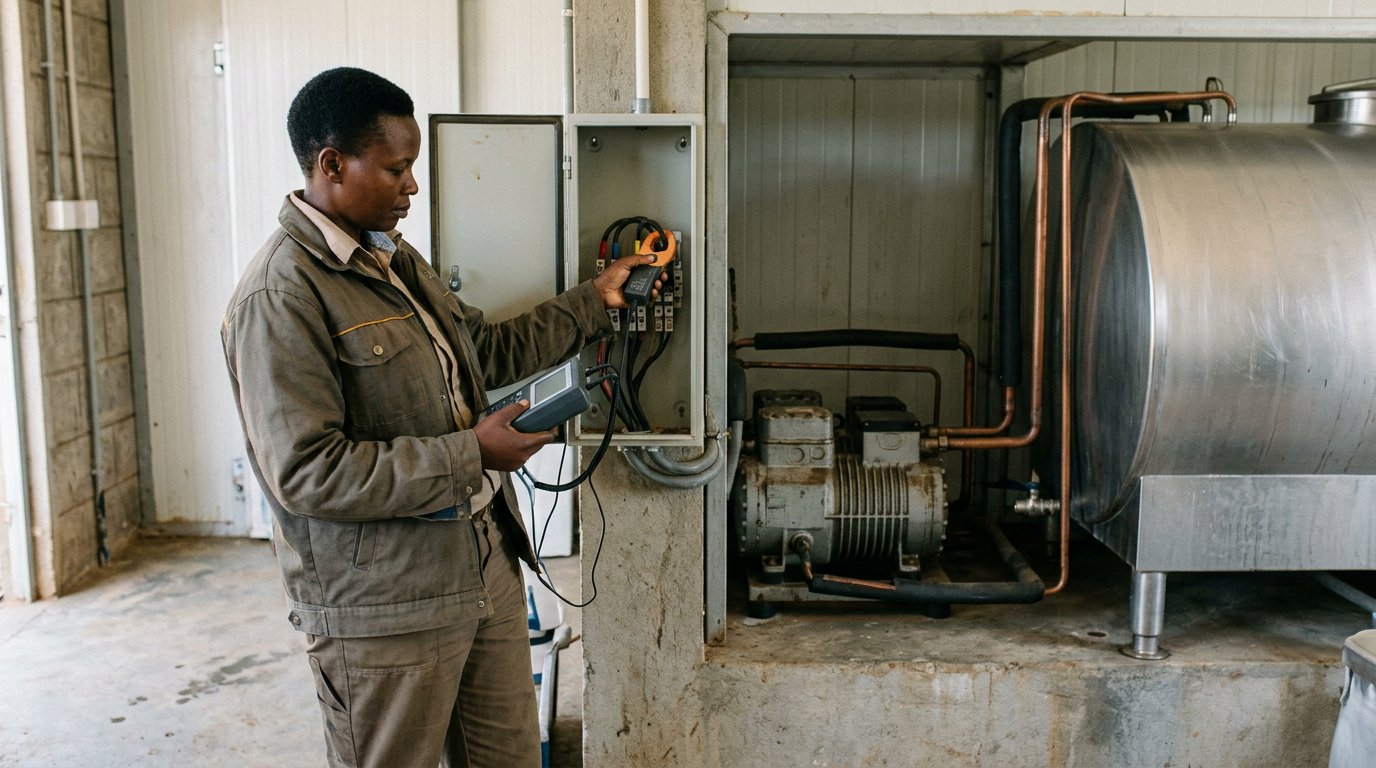
Solar system design should start with evidence about site demand: an energy audit measures and analyzes consumption across a building’s structure, services, controls, equipment and operating processes. It also reviews management practices, such as maintenance, to identify where energy is used and where improvements may be possible.
For organizations considering energy audit services in Kenya, an assessment is especially useful before solar installation. It clarifies when demand occurs, identifies major equipment or process loads, and reviews energy supply and metering, so system planning reflects actual operating conditions rather than assumptions.
The report can rank opportunities, from operational changes to capital investments, set out an action plan and estimate payback periods. This gives you a basis for assessing efficiency measures alongside solar generation and storage. An audit can reveal what professionals measure, how findings inform investment decisions and what to consider before a solar project proceeds.
Key Takeaways
- Use an energy audit to identify how equipment, building systems and operating practices shape your energy demand.
- Read the audit report to see where consumption occurs and which improvement opportunities merit further assessment.
- Use estimated payback periods to compare energy-saving investments against their expected operational benefits.
- Bring audit findings into solar planning so system design reflects actual demand patterns and site conditions.
What is an energy audit?
An energy audit assesses consumption to show where energy is used and where efficiency improvements may be possible. Its findings can guide operating decisions and future investment planning.
Audit Types and Scope
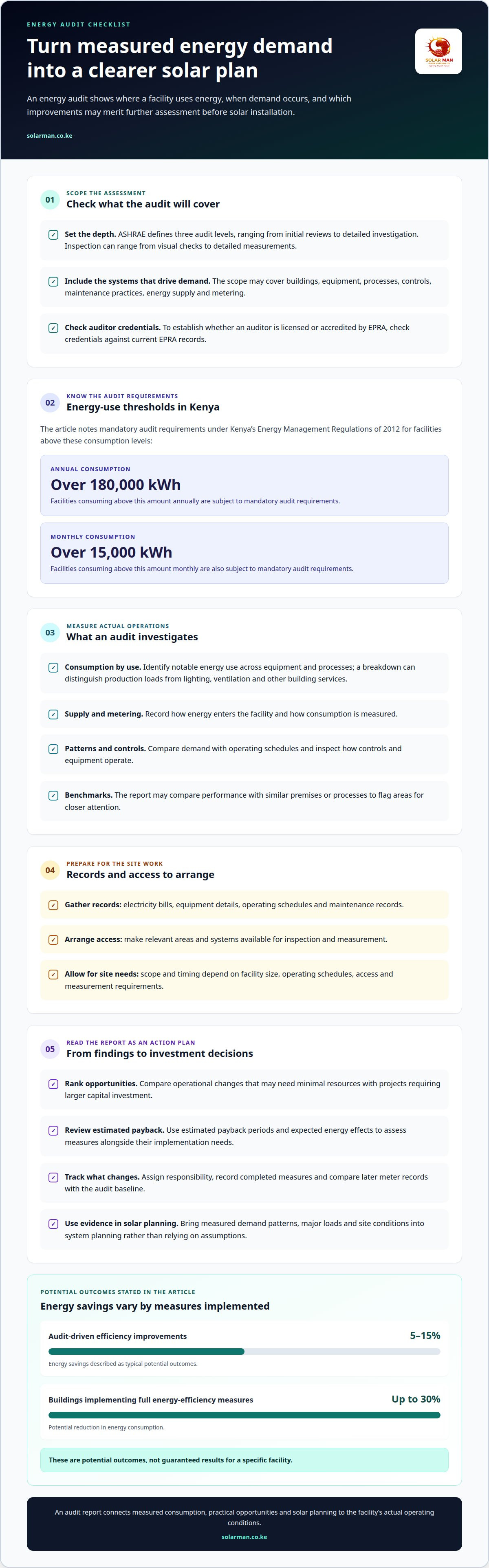
Audit scope defines the depth of inspection and measurement, helping you select an assessment suited to your facility. ASHRAE defines three audit levels, from initial reviews to detailed investigation; inspections can range from visual checks to detailed measurements. Energy audit services in Kenya can examine buildings, equipment, processes, controls and maintenance practices. Kenya’s Energy Management Regulations of 2012 require audits for facilities consuming over 180,000 kWh annually; facilities consuming over 15,000 kWh monthly are also subject to mandatory audit requirements. Engineering and energy-management firms provide audits. To establish whether an auditor is licensed or accredited by EPRA, check the auditor’s credentials against current EPRA records.
Energy-Saving Opportunities
Energy-saving opportunities are operational changes or investments that may reduce consumption. Audit-driven efficiency improvements typically deliver 5–15% energy savings, while buildings implementing full energy-efficiency measures can reduce energy consumption by up to 30%. These are potential outcomes, not guaranteed results for a specific facility. Energy audit services in Kenya assess equipment use and operating practices to help identify measures, rank them by implementation needs and inform action planning.
Audit Process and Preparation
A professional audit generally combines records review, site inspection, measurements and reporting. Its scope and timing depend on facility size, operating schedules, access and measurement requirements. Businesses typically provide electricity bills, equipment details, operating schedules and maintenance records, while arranging access to relevant areas and systems. The resulting report presents findings and possible actions. An auditor without appropriate authorization may leave uncertainty about regulatory acceptance or the report’s standing. Grants, incentives and financing for efficiency improvements depend on separate programme terms; an audit alone does not establish eligibility.
An energy audit is a useful first step in building an energy management plan. It can prioritize opportunities, from operational changes to measures requiring substantial capital investment, and outline an action plan. This helps a business organize potential improvements and plan how to address them.
Energy measurements and audit reports
An audit report links utility consumption to the systems and activities driving demand. It can summarize energy supply, metering arrangements, consumption patterns and major energy uses by equipment or process. At a facility with a production line and office block, for example, the breakdown can distinguish process loads from lighting, ventilation and other building services. This gives decision-makers a clearer basis for further investigation.
Site observations and measurements help explain what utility bills alone cannot show. An auditor can inspect equipment and controls, compare energy use with operating schedules, and record how demand changes across processes. The report may also benchmark performance against similar premises or processes. Such comparisons can flag unusual loads, operating patterns or control settings for closer attention, without assuming that every facility has the same energy profile.
- Consumption breakdown: Identify which equipment or processes account for notable energy use.
- Supply and metering: Document how energy enters the facility and how consumption is recorded.
- Performance benchmark: Compare the facility with similar premises or processes.
Prioritization turns audit findings into an action plan. The report can rank measures from operational changes that require minimal resources to projects involving larger capital investments. For example, management can assess an operating adjustment alongside an equipment upgrade, considering each option’s expected energy effect and implementation requirements. This helps distinguish near-term actions from proposals that need design, approval or capital planning.
Use the report to assign responsibility, track completed measures and review subsequent consumption. Comparing later meter records with the audit baseline helps show whether operating changes affected demand. This evidence supports decisions about which recommendations to advance, revise or investigate further, linking energy management to measured facility performance.
Energy audits can include inspections of buildings and equipment, from visual checks to detailed measurements. The depth of inspection varies, allowing the auditor to assess energy use through observation and measurement. The report can break down consumption and identify potential savings. Organizing the findings this way highlights areas for further attention and gives decision-makers a basis for considering improvements.
Payback periods for energy-saving investments
An audit links proposed efficiency measures to estimated energy savings and investment payback. This helps Kenyan businesses compare operational improvements with equipment upgrades.
Payback Periods and Return on Investment
A payback period estimates how long savings take to recover an investment. Return on investment (ROI) compares expected financial benefits with the funds committed. Both measures help you assess competing recommendations and plan capital decisions. A shorter payback may support earlier implementation, while longer-term returns can also matter for equipment with lasting operational value.
An audit report estimates payback periods for proposed measures using energy consumption and expected savings. Management can compare options, consider implementation needs and prioritize measures against operational requirements. For example, changing equipment schedules and undertaking a major equipment upgrade may involve different investments and expected savings. Comparing estimated payback periods gives decision-makers a consistent basis for sequencing projects.
Expected Savings and Payback
Audit-driven efficiency improvements typically deliver 5–15% energy savings, while buildings implementing comprehensive measures can reduce consumption by up to 30%. These figures describe potential outcomes, not a forecast for every site. An audit connects recommendations to the facility’s actual equipment, operating patterns and consumption, allowing proposed savings to be assessed against its conditions.
Most businesses recoup their energy audit investment within 12–18 months through energy savings. This period concerns the audit investment, while the payback for each recommended improvement depends on its implementation requirements and resulting energy reduction. The report estimates those project-specific paybacks so you can distinguish measures with near-term returns from investments needing longer planning.
Use estimates alongside operating priorities, rather than treating them as stand-alone rankings. A measure affecting a critical process may need different timing from a change with similar projected savings but less operational impact. Comparing projected reductions, implementation requirements and payback periods helps your team set a practical sequence. After implementation, assess actual consumption against the audit baseline.
Energy audits before solar installation
Before solar installation, an energy audit connects a facility’s demand with the system being planned. In Kenya, energy audit services help businesses assess grid electricity use alongside potential solar generation. The assessment distinguishes operating loads from consumption that may be reduced, giving planners a clearer basis for system design than a utility bill alone.
Demand timing matters as much as total consumption. A facility using most of its electricity during daylight may be able to align some loads with solar production. A business operating in the evening may need a different balance of grid supply, solar generation and storage. Reviewing schedules and major equipment clarifies these patterns before system sizing begins.
Audit findings can identify efficiency measures to assess before specifying solar equipment. Reducing unnecessary demand may change the generation or storage capacity required. For example, a review may identify controls or operating practices to address before finalizing a solar design. Energy audit services in Kenya can connect this demand analysis to project design decisions.
- Load profile: Relate consumption to operating hours and equipment demand.
- Solar alignment: Identify which daytime activities can use solar generation.
- Storage role: Assess how operating schedules affect the need for stored energy.
For small and medium-sized enterprises in Kenya, implementing audit recommendations can reduce overall energy costs by 18–25%. This represents potential savings, not an assured outcome for every business. The assessment relates recommendations to site conditions, helping planners compare efficiency measures with solar investment.
The practical takeaway is to assess solar system loads before choosing equipment. Measured consumption, operating patterns and identified improvements can help align a proposed system with actual site requirements, whether it serves a home, institution or commercial facility.
Solar Man Power Solutions: Energy Audits, Monitoring & Energy Management
Solar Man Power Solutions provides Energy Audits, Monitoring & Energy Management for businesses assessing energy use, planning improvements or preparing for solar. The service connects audit findings with energy management decisions, helping you evaluate operational priorities before making changes. It is useful when you need a clearer picture of facility consumption or want measured demand to inform solar planning.
The assessment can inform Solar PV System Design & Installation by relating system planning to site energy requirements and conditions. If your project includes storage or a change in how the site uses grid electricity, Energy Storage Systems (ESS) and Hybrid, Grid-Tied & Off-Grid Solar Solutions are related options. The right approach depends on your load profile, operating schedule and project requirements.
- Assess demand: Review facility consumption and identify energy-management priorities.
- Plan solar: Use site requirements to inform photovoltaic system design.
- Consider storage: Assess whether energy storage aligns with operating needs.
Monitoring supports decisions beyond the initial assessment by tracking system output and operation over time. This helps you review performance against operational requirements and identify where further assessment or system changes may be relevant. For a facility considering solar, connecting audit results with design planning keeps demand analysis and the proposed system within the same decision process.
The team’s engineering work supports residential, commercial and industrial energy projects, with system design informed by energy needs and site conditions. Discuss an audit or energy management requirement with Solar Man Power Solutions when you need to understand facility consumption, assess potential improvements or prepare for a solar project.
Contact Solar Man Power Solutions to discuss your energy audit requirements.
Frequently Asked Questions
Which Kenyan energy auditors are licensed or accredited by EPRA?
Engineering and energy-management firms provide audits. Check an auditor’s credentials against current EPRA records to establish whether they are licensed or accredited.
What is the process and typical timeline for an energy audit in Kenya?
An audit typically combines a records review, site inspection, measurements and reporting. Its scope and timing depend on facility size, operating schedules, access and measurement requirements.
Disclaimer
**Disclaimer**
The information published on this website is provided by Solar Man Power Solutions Ltd for general informational and educational purposes relating to solar energy, renewable energy systems, power backup, energy storage and related technologies.
While we make every effort to ensure that the information is accurate, reliable and up to date, product specifications, technical details, prices, availability and system configurations may change without prior notice. Information provided in our articles, guides and product descriptions should not be considered a substitute for a professional site assessment, technical evaluation or customized quotation.
**Solar System Performance:** Actual solar system performance, energy generation, battery backup duration and savings depend on several factors, including geographical location, weather conditions, equipment specifications, installation quality, energy consumption patterns and system maintenance. Any performance figures or estimated savings are indicative and are not guaranteed results.
**Product Information:** Product images, descriptions, specifications and technical information are provided for reference. Manufacturers may update product designs, specifications and features from time to time.
**Pricing and Quotations:** Prices, promotions and product availability displayed on this website are subject to change. Final project costs and system recommendations are determined following an assessment of the customer's requirements and site conditions.
**Professional Installation:** Solar installations and electrical systems should be designed, installed and commissioned by appropriately qualified professionals in accordance with applicable Kenyan laws, regulations and technical standards.
**External Links:** This website may contain links to third-party websites for additional information. Solar Man Power Solutions Ltd is not responsible for the content, accuracy or privacy practices of external websites.
By using this website, you acknowledge that the information provided is for general guidance and that any purchasing, installation or investment decision should be based on appropriate professional advice and an assessment of your specific requirements.
For technical assistance, product enquiries, quotations or professional solar energy solutions, please contact Solar Man Power Solutions Ltd through our official communication channels.
**Solar Man Power Solutions Ltd**
Reliable Solar & Energy Storage Solutions for East Africa.
Website: https://solarman.co.ke