Why Quality Street Light Poles Matter for Modern Infrastructure
In this blog post, we will delve deeper into the significance of street light poles, discussing their various benefits, materials used, and how they contribute to safer urban environments. We will also explore the evolution of street lighting technology and its impact on energy efficiency and sustainability.
The advancement of technology has led to innovative solutions in street lighting, such as the integration of LED technology, which not only enhances brightness but also significantly reduces energy consumption. The implementation of smart lighting systems allows for adaptive lighting based on real-time data, making streets safer and more efficient.
Furthermore, the aesthetic aspect of street light poles cannot be overlooked. Attractive designs can enhance the visual appeal of urban areas, making them more inviting for pedestrians and tourists alike. Many cities are now opting for decorative poles that complement their architectural style.
In addition to safety, street lighting plays a crucial role in crime prevention. Well-lit streets deter criminal activity, as potential offenders are less likely to commit crimes in areas that are visible and illuminated. This highlights the importance of strategically placing street light poles to maximize coverage in high-risk areas.
Moreover, the impact of street lighting extends beyond immediate safety. Studies have shown that well-lit streets improve property values, as neighborhoods with effective lighting attract more residents and businesses. A safe and inviting environment is essential for community development.
The economic advantages of investing in quality street light poles are significant. While the initial cost may be higher, the long-term savings due to reduced energy consumption and lower maintenance costs make them a smart investment for city planners.
As urban areas continue to expand, the challenge of providing adequate street lighting becomes more pressing. Cities must balance growth with sustainability, ensuring that their lighting solutions align with environmental goals. The shift towards solar-powered street light poles is a prime example of this trend, reducing the carbon footprint associated with traditional lighting.
It’s also important to recognize the role of community feedback in the planning and placement of street light poles. Engaging local residents in discussions about street lighting can lead to better decision-making and enhanced satisfaction with public infrastructure.
In the context of single arm poles, these are particularly beneficial in residential areas where space may be limited. They provide sufficient lighting without overwhelming the streetscape, ensuring a balance between functionality and aesthetics.
Additionally, single arm poles can be equipped with smart technology to monitor traffic patterns, weather conditions, and even air quality, providing valuable data for urban planners.
Double arm poles, on the other hand, are crucial for highways where high volumes of traffic are present. They not only improve visibility for vehicles but also enhance safety for cyclists and pedestrians crossing major roads.
These poles can be customized with various lighting fixtures that cater to specific traffic needs, ensuring that all road users feel safe and secure.
High-quality steel street light poles can also be designed to be more aesthetically pleasing, featuring decorative elements that enhance the urban landscape while providing essential lighting.
Furthermore, the use of steel allows for flexibility in design, enabling the creation of poles that meet both structural and visual requirements, thus aligning with contemporary urban design principles.
By utilizing advanced manufacturing techniques, the performance of steel poles is further enhanced, leading to poles that are not only strong but also lightweight, making installation and maintenance simpler and more efficient.
Corrosion protection has evolved as well, with new methods being developed to ensure longevity. Innovations in coatings and treatments are allowing for even greater resistance to the elements, making it possible for street light poles to withstand extreme weather conditions.
In addition to hot-dip galvanization, newer technologies such as powder coating offer aesthetic benefits while providing a barrier against corrosion, allowing for a variety of colors and finishes that can complement urban design.
These advancements in corrosion protection mean that cities can invest in lighting infrastructure without the fear of degradation over time, further contributing to sustainable urban planning.
When choosing the right street light pole, it is essential to consider the specific needs of the community. For instance, areas with high pedestrian traffic may require different lighting solutions compared to industrial zones.
Incorporating factors such as community feedback and urban design principles can lead to a better selection process, ensuring that the chosen poles meet the functional and aesthetic needs of the area.
Street lighting is one of the most important elements of public infrastructure. From highways and residential roads to industrial zones and commercial areas, proper lighting improves visibility, enhances security, and supports safer transportation at night. However, the effectiveness of any lighting system depends greatly on the quality of the street light poles supporting it.
Street light poles are more than simple metal structures. They are engineered components designed to withstand environmental pressure, support lighting equipment, and provide long-term reliability in outdoor conditions.
The Role of Street Light Poles in Road Safety
Road illumination significantly reduces nighttime accidents by improving visibility for drivers, cyclists, and pedestrians. Good lighting also minimizes the effects of high-beam glare from oncoming vehicles, making roads safer for everyone.
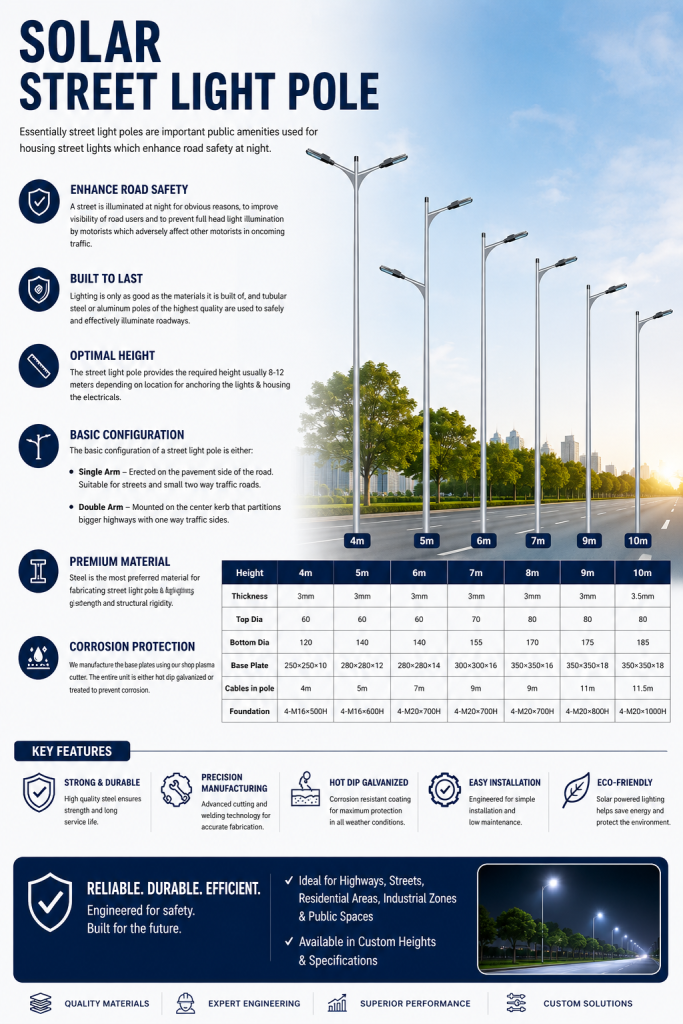
To achieve efficient lighting performance, poles must provide the correct height and positioning for the lighting fixtures. Most street light poles range between 8 to 12 meters depending on road width and traffic requirements.
Common Types of Street Light Poles
There are two major configurations commonly used:
Ultimately, investing in the right street light poles involves understanding both the immediate needs and long-term goals of urban infrastructure, paving the way for safer and more sustainable communities.
Single Arm Poles
Single arm poles are mounted along the roadside pavement and are ideal for streets, estates, parking areas, and smaller roads.
Double Arm Poles
Double arm poles are typically installed on center medians or kerbs along highways and dual carriageways. They provide lighting coverage for both sides of the road.
Why Steel is the Preferred Material
Steel is widely used for street light pole fabrication due to its exceptional strength and structural rigidity. High-quality tubular steel poles are capable of supporting heavy lighting systems while resisting wind loads and environmental stress.
Modern manufacturing processes such as plasma cutting ensure precise base plate fabrication and accurate installation alignment.
Importance of Corrosion Protection
Since street light poles are constantly exposed to rain, sunlight, and varying weather conditions, corrosion protection is essential. Hot-dip galvanization is one of the most effective methods used to protect steel poles from rust and deterioration.
Galvanized poles have a longer lifespan, lower maintenance requirements, and better long-term performance.
Choosing the Right Street Light Pole
When selecting a street light pole, important factors include:
- Pole height
- Road width
- Traffic density
- Lighting fixture weight
- Environmental conditions
- Installation location
Choosing the correct pole ensures proper illumination, structural safety, and cost-effective operation over time.
Conclusion
High-quality street light poles are essential for reliable outdoor lighting systems. Whether used for solar street lighting, highways, estates, or public infrastructure projects, durable and corrosion-resistant poles provide long-lasting performance and improved safety. Investing in professionally manufactured street light poles ensures dependable lighting infrastructure that serves communities effectively for years to come. Ultimately, the importance of street light poles cannot be overstated, as they play a crucial role in urban safety, aesthetics, and sustainability, making them vital components of modern infrastructure. Why Quality Street Light Poles Matter for Modern Infrastructure
High-quality street light poles are essential for reliable outdoor lighting systems. Whether used for solar street lighting, highways, estates, or public infrastructure projects, durable and corrosion-resistant poles provide long-lasting performance and improved safety.
Investing in professionally manufactured street light poles ensures dependable lighting infrastructure that serves communities effectively for years to come.