50kW Solar + Battery Storage for Businesses in Kenya: Typical Design, Components & Cost Factors (2026)
A 50kW solar system is one of the most popular commercial solar sizes in Kenya because it fits a wide range of businesses—from medium factories and office blocks to hotels, schools, supermarkets, and warehouses. But in 2026, the conversation is no longer just “install solar.” Many business owners now ask a smarter question:
“How do I add battery storage to make the solar system more reliable and more profitable?”
A properly designed 50kW solar + battery storage system can reduce electricity bills, improve power stability, and provide backup during outages. However, to get the best results, the system must be engineered correctly based on your load profile and operating hours.
Why Businesses Choose a 50kW Solar + Storage System
A typical commercial customer chooses this solution for three main reasons:
1) Lower Electricity Bills (Solar Savings)
Solar reduces daytime grid consumption. When the sun is strong, your facility runs directly on solar power.
2) Peak Shaving (Demand Charge Reduction)
Some businesses experience demand spikes from motors, compressors, HVAC systems, and machinery. Battery storage helps supply extra power during these peaks so you pull less power from the grid when demand is highest.
3) Backup Power (Business Continuity)
Grid outages in Kenya can disrupt operations, damage sensitive equipment, and cause revenue losses. A battery system provides instant backup power to critical loads, often reducing generator dependency.
Typical Components of a 50kW Solar + Battery Storage System
A complete system includes:
Solar PV Modules (50kWp)
Solar panels are sized in kWp (kilowatt-peak). For 50kW, the exact number of panels depends on the wattage per panel (e.g., 550W–720W modules).
Mounting Structure
This includes roof-mounted or ground-mounted structures, designed for wind load and long-term durability.
Hybrid Inverter or PCS + ESS Integration
For commercial installations, you may use:
- A large hybrid inverter, or
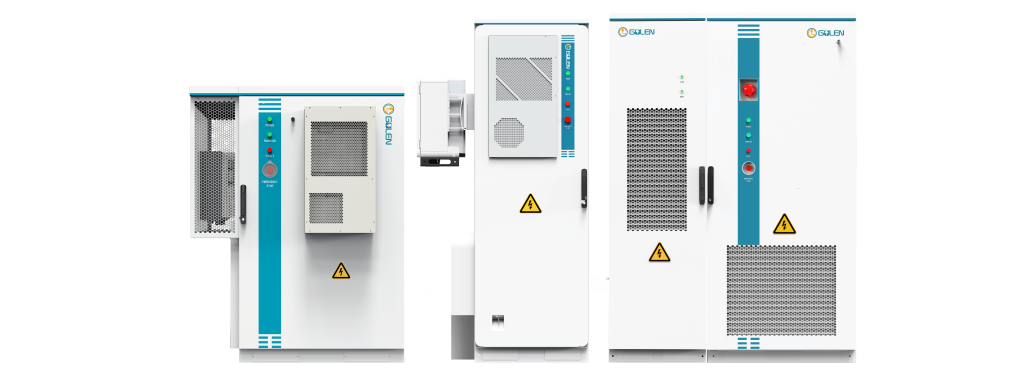
- A PCS (Power Conversion System) integrated with a battery energy storage cabinet
The choice depends on your site needs, grid conditions, and whether you plan to scale.
Battery Storage (kWh)
Battery capacity depends on your objectives:
- For peak shaving support: 50kWh–150kWh
- For backup power: 100kWh–300kWh+
- For hybrid savings + backup: 150kWh–250kWh is common
The battery is typically LFP (Lithium Iron Phosphate) due to safety and long cycle life.
Protection and Electrical Balance of System (BOS)
This includes:
- DC combiner boxes (if required)
- AC distribution boards
- breakers, isolators, surge protection
- earthing and lightning protection
- proper cable sizing and termination
Monitoring and Energy Management
A commercial system should include monitoring via:
- WiFi/Ethernet/4G options
- smart meters
- EMS monitoring for battery performance
This ensures you can track savings and system health over time.
How to Size the Battery for a 50kW Solar Site
The correct battery size depends on your load profile. Here are practical examples:
Example A: Daytime Business (Office or Retail)
If your operations are mainly 8am–6pm, solar alone covers a large portion of usage. Battery storage can be smaller and used for:
- short backup
- peak shaving
- smoothing fluctuations
Example B: 24/7 Business (Factory or Cold Room)
If you run overnight, battery storage becomes more valuable because it can:
- support evening loads
- reduce generator runtime
- provide stable backup for critical operations
Example C: Unstable Grid Area
If your location experiences frequent blackouts, battery storage must be sized for reliability, not just savings.
Cost Factors in Kenya (What Affects Pricing in 2026)
The total cost of a 50kW solar + storage system depends on:
- Battery capacity (kWh) and discharge power (kW)
- Type of inverter/PCS and whether it is 3-phase commercial grade
- Brand and warranty level
- Installation complexity (roof height, cable distance, trenching)
- Monitoring requirements and remote support
- Whether the system includes generator integration and ATS changeover
Conclusion
A 50kW solar + battery storage system is one of the best investments for businesses in Kenya when designed correctly. It can deliver:
- lower bills
- better uptime
- improved solar ROI
- reduced generator costs
The best next step is a professional load assessment to ensure correct sizing and accurate pricing.
Contact Us
Reliable Solar & Energy Storage Solutions for East Africa
Northern Bypass, Nairobi – Marurui
Behind Galana Energies, Village Inn Road
Tel: +254 712 172 222 | +254 784 323 222
Email: info@solarman.co.ke
Website: www.solarman.co.ke